The most extraordinary few weeks in a bird's year
Every year, roughly 10,000 bird species worldwide enter the nesting season. In the Northern Hemisphere, this runs broadly from March through August, though the exact timing shifts by species, latitude, and climate. Some birds like Mourning Doves and House Sparrows nest almost year-round in warmer regions, producing up to six broods in a single year. Others, like the Common Swift, have just one shot at it, arriving from sub-Saharan Africa in May and departing again by August with their young.
.png)
The numbers behind nesting are quietly staggering. A pair of Blue Tits may make over 1,000 feeding visits to the nest per day at peak demand. A Barn Swallow builds its mud cup from up to 1,400 individual mud pellets, each carried one at a time. An American Robin incubates its eggs for 12–14 days, then spends another 13 days feeding nestlings before they fledge and may raise two or three broods in the same season. Globally, scientists estimate that bird nesting failures caused by human disturbance account for a significant proportion of annual breeding losses, particularly in urban and suburban environments where nesting birds and people share the same structures.
Which is exactly how a bird ends up under your eave.
What you're actually looking at
"A quiet nest is almost never an empty one. This surprises most people."
During incubation, birds deliberately reduce their visits to avoid drawing attention from predators. A female songbird may only return to the nest once a day during egg-laying. An incubating adult can sit so still for so long that the whole thing looks abandoned, but that stillness is one of the cleverest survival strategies in nature.
According to the Cornell Lab of Ornithology, most songbird incubation periods last 10–14 days, during which adults reduce nest visits by up to 80%. Once nestlings hatch, the same pair may make 100–300 feeding trips per day. Once the eggs hatch, everything changes. The adults are suddenly everywhere, bringing insects, removing fecal sacs, responding to a very insistent chorus of chicks.
.png)
The nest that appeared inactive last week becomes the busiest spot on the block. If you want to observe, do it from a distance with binoculars or a phone zoom. Late morning or early afternoon is better than dawn, when adults are most sensitive to disturbance. Let the birds' behaviour tell you what stage they're at rather than drawing conclusions from a single quiet afternoon.
Who has moved in?
Identifying the species matters, not just for the satisfaction of knowing, but because it tells you how long this will last, whether they'll return next year, and what the birds actually need from the space they've claimed.
Barn Swallows and House Martins build their characteristic mud cups under eaves and overhangs, often returning to the exact structure their parents used. They migrate thousands of kilometres and navigate back to a specific building with remarkable precision. House Martins raise two broods most summers, and existing nests from previous seasons measurably improve their breeding success. That old mud cup is worth keeping.
.png)
House Martin populations have declined by approximately 37% in the UK since 1969, according to the British Trust for Ornithology. Preserving existing nest structures is one of the most practical things a homeowner can do for this species.
Common Swifts and Chimney Swifts occupy a category of their own. These birds eat, sleep, and even collect nesting material entirely on the wing the only time they land is to nest, and they depend on buildings to do it. Common Swift numbers have fallen 58% across the UK since 1995 (RSPB), and Chimney Swift populations in North America declined by an estimated 67% between 1966 and 2019 (North American Breeding Bird Survey). If swifts have moved into your roof space or chimney, every successful nest has genuine conservation value.
House Sparrows and Starlings are adaptable and often overlooked, but they're worth watching, there's real focus and effort in how they build.
Rock Pigeons and Mourning Doves favour ledges and flat surfaces: gutters, window sills, light fixtures. Pigeons descend from cliff-dwelling species, so from their perspective, your gutter is a perfectly reasonable nesting site.
.png)
American Robins tend to choose whatever spot is most inconvenient, porch lights, drainpipes, door wreaths, but their nests, if you look closely, are carefully constructed from layers of mud, grass, and fine lining material.
What the law says (and why it makes sense)
"Most active bird nests are legally protected. Once you understand the biology, the reasoning is clear."
In the United States, the Migratory Bird Treaty Act covers most wild bird nests containing viable eggs or nestlings. Violations carry penalties of up to $15,000 and six months in federal prison per offence.
In the UK, the Wildlife and Countryside Act 1981 protects any nest in use or being built, including nests still under construction before the first egg arrives, with a maximum penalty of six months' imprisonment and an unlimited fine per nest affected.
Canada and the EU operate under similar frameworks, with certain species receiving year-round protection regardless of nesting status.
.png)
What they need from you right now
The most useful thing you can do is be unobtrusive. Reduce foot traffic near the nest, keep pets away, and pause any planned work on that section of the house. Resist the urge to check too often, parental desertion and increased predator attention are both linked to excess human activity around the nest, not too little.
A few specific situations to be aware of:
- If there's a nest in the chimney, do not light a fire until the young have fully fledged and the nest is inactive. Have the chimney professionally swept afterwards and fit a cowl if you want to prevent future access. If swifts are involved, patience is especially important, they are a protected species with declining populations, and every successful nest matters.
- If a nestling (a young bird with few or no feathers) falls from the nest, you can safely handle it. The belief that touching a baby bird causes its parents to abandon it is a persistent myth. While birds do have a sense of smell, it varies by species, and their parental instincts are generally strong enough that they will continue caring for their young. If the nest is intact, place the nestling back inside.
- If the nest is gone, a substitute container positioned as close to the original site as possible can work. Watch from a distance for a couple of hours. If the parents don't return or the bird appears injured, contact a licensed wildlife rehabilitator. It's important to distinguish between a nestling and a fledgling. Nestlings are sparsely feathered and depend on the nest, while fledglings are fully or mostly feathered, have open eyes, and spend time on the ground as they learn to fly. Fledglings are often mistaken for abandoned babies, but in most cases they should not be returned to the nest, as their parents are usually nearby and continuing to care for them.
- If there's a genuine safety issue, a blocked vent, a fire hazard, a bird inside the house and contact your national wildlife authority or a local rehabilitator rather than attempting to resolve it yourself.
After the nest is empty
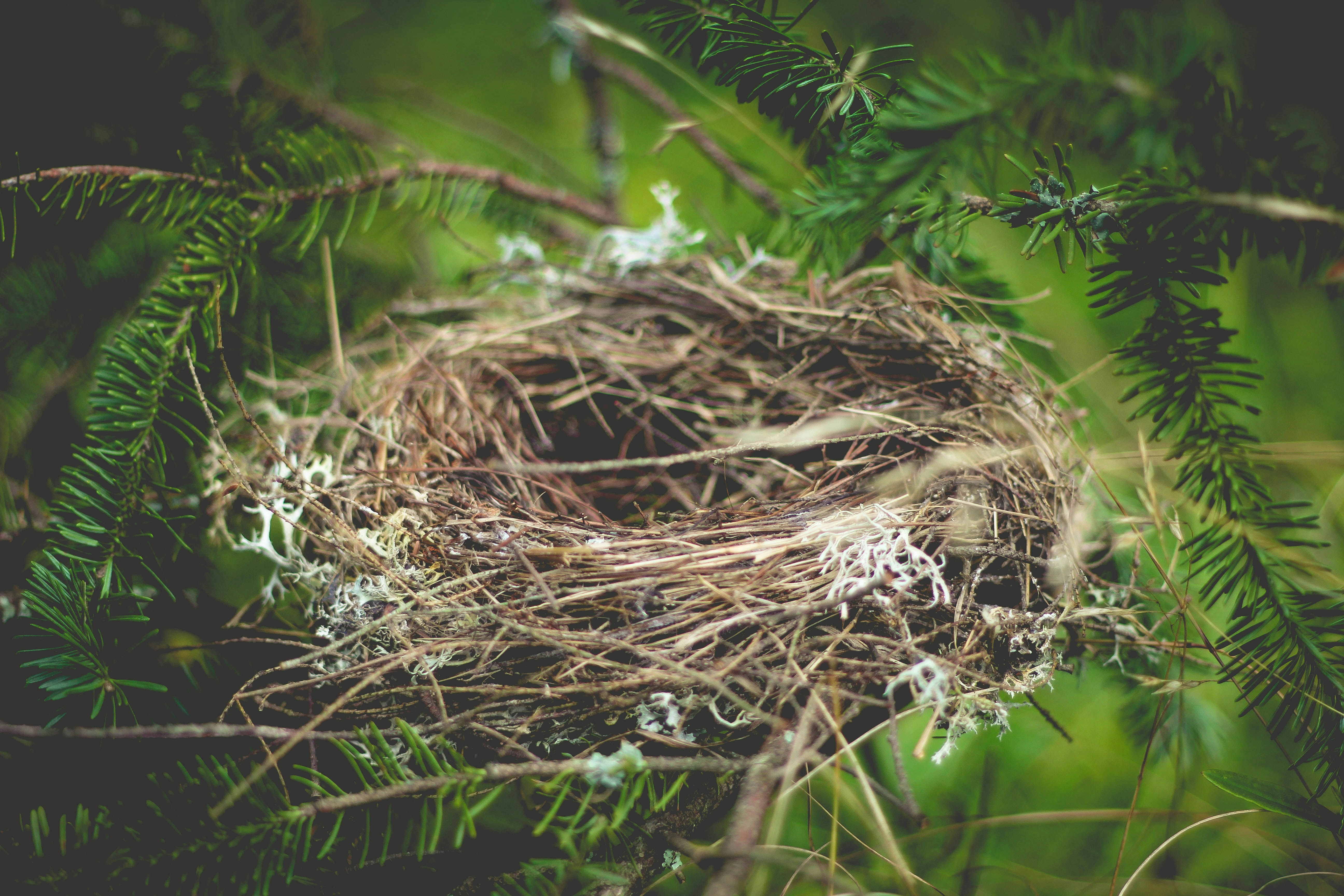
Once you're confident the nest is empty ,no eggs, no chicks, no activity over several weeks, you can clean the site. If you'd prefer the birds don't return to the same spot, seal the entry point the same day you clean. Swallows, martins, and pigeons return to previous nest sites with high reliability, so an unsealed gap is effectively an open invitation.
The best time to carry out exclusion or repair work is late winter, February or early March in the Northern Hemisphere, before birds begin scouting for nest sites. If you're redirecting a declining species such as House Martins or Swifts, install an appropriate nest box or artificial cup nearby first. You're not removing the option; you're relocating it.
Want to get to know your new neighbours a little better?
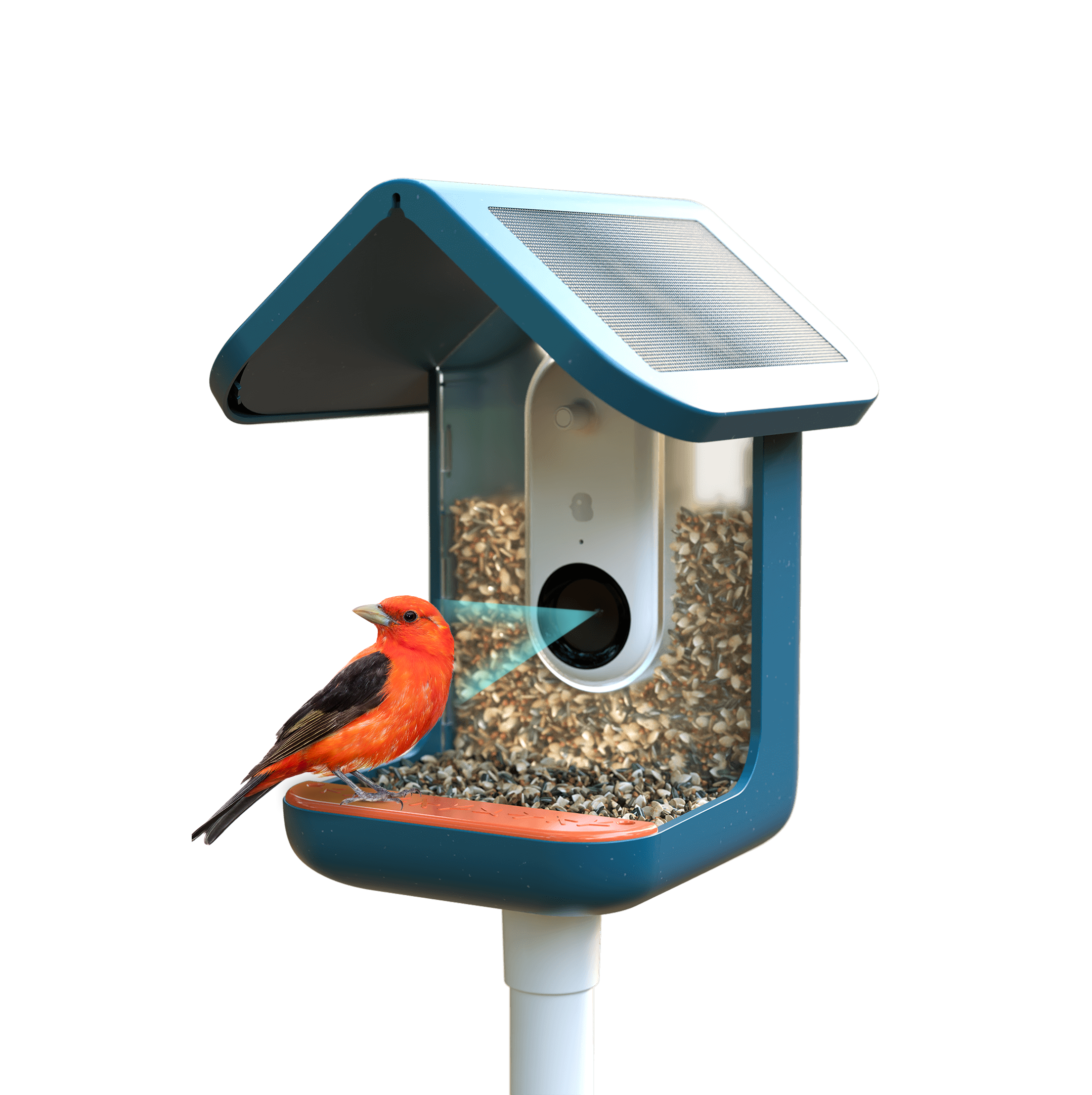
A Bird Buddy smart feeder lets you identify exactly which species are visiting, watch them up close without disturbing the nest, and follow their daily routines through the app. Because once you've had a bird family on your house, you'll want to keep them coming back.