So how do birds stay warm in winter? Four things do most of the work: insulating feathers, shivering muscles, fat stored up during the day and legs built to run cold. Here's how each trick works, and what to watch for at your feeder.

Key takeaways
- Birds stay warm by trapping air in fluffed feathers, shivering to make heat and burning fat stored during the day.
- A chickadee can add about 10% of its body weight in fat in one day and use nearly all of it overnight (National Wildlife Federation).
- Their legs run a countercurrent heat exchange, so feet stay cold without freezing.
- Feeders help most at dawn and dusk, and during ice storms, cold snaps and deep snow.
1. Their feathers work like a down jacket
When a bird fluffs up, it lifts its feathers and traps a layer of still air against its body. That air warms up and stays put, the same way the filling in your winter coat works. A fluffed-up bird can look almost twice its usual size.
Many songbirds also grow a fresh, denser set of feathers in fall (that's the molt you may have noticed a few weeks ago), so they head into winter better insulated than they were in summer. That's why the birds at your feeder look round on a frosty morning. As the day warms up, they slim down again.
2. They tuck themselves in
A resting bird turns its head and pushes its bill into the feathers on its back, so it breathes air already warmed by its own body. It crouches low so its belly feathers cover its legs, or stands on one leg and pulls the other up out of the cold. Less bare skin means less heat lost.
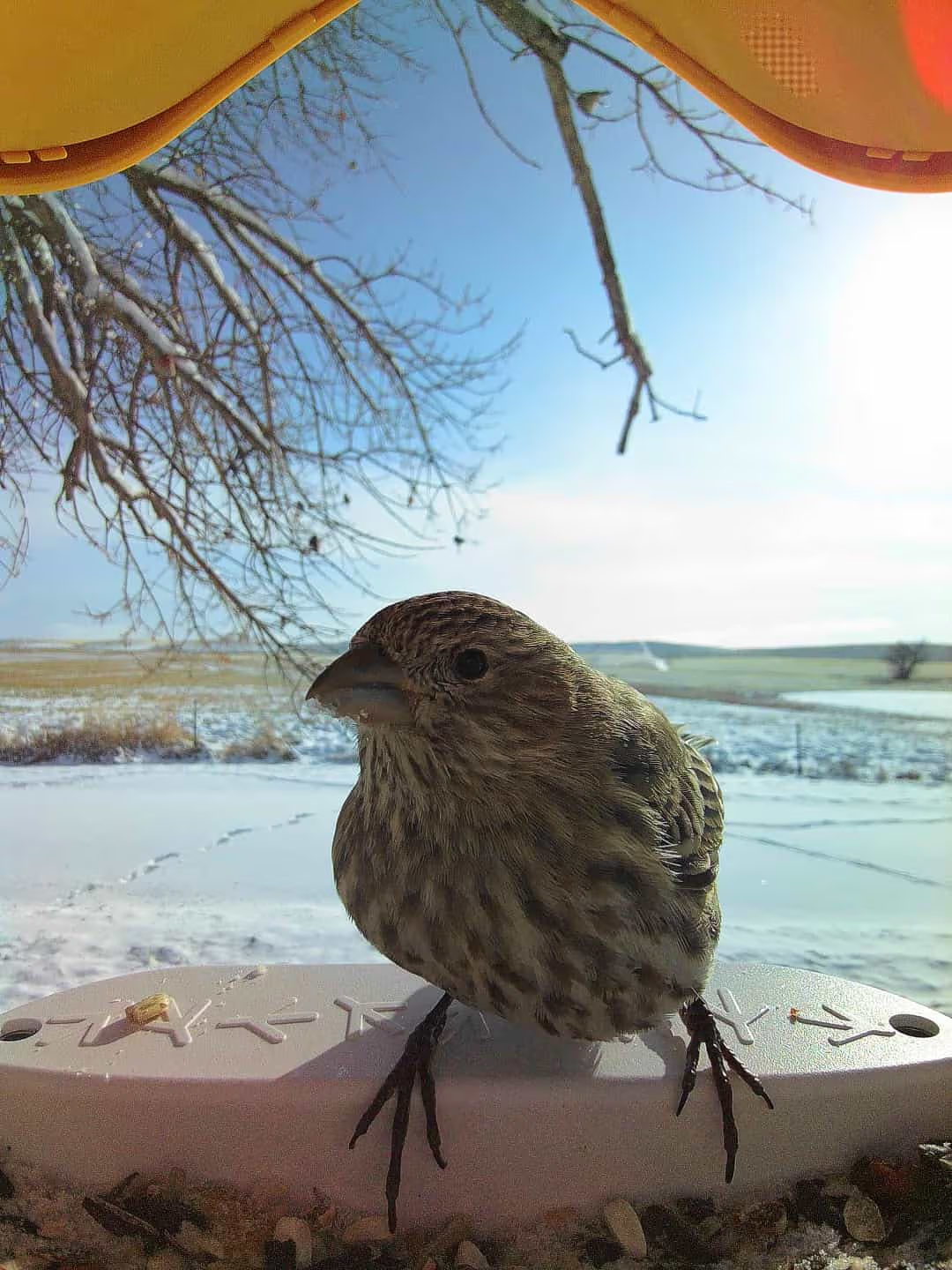
3. Their feet are supposed to be cold
Birds really do get cold feet, and it's on purpose. Their legs have a built-in heat exchanger: warm blood heading down to the feet runs right alongside cold blood coming back up, so the heat passes across before it reaches the toes. The Cornell Lab of Ornithology calls it a countercurrent heat exchange system. The feet stay just above freezing, cold enough to lose very little heat but warm enough not to freeze.
Bird legs are mostly bone, tendon and scaly skin, with very little soft tissue to damage. That's how a duck can stand on ice and a cardinal can grip a frozen branch all morning.
4. They shiver all night
Shivering is the main way small birds make heat. Birds tense their big flight muscles in tiny, fast contractions that don't move the wings but do make heat. Small birds like chickadees can shiver through the whole night to hold a daytime body temperature of about 108°F, roughly ten degrees warmer than yours.
5. They eat all day for one night
All that shivering burns fuel, so winter birds spend most of the daylight eating. Research on chickadees reported by the National Wildlife Federation found birds with almost no body fat at dawn "bulging with fat" by the afternoon, gaining 10% or more of their body weight each day. By morning, nearly all of it is gone. Chickadees and nuthatches also hide seeds in bark and crevices in fall, and remember where they put them.
That's why your feeder is busiest in the first hour after sunrise, when birds have just used up the night's fat, and again in the last hour before dark, when they're stocking up.
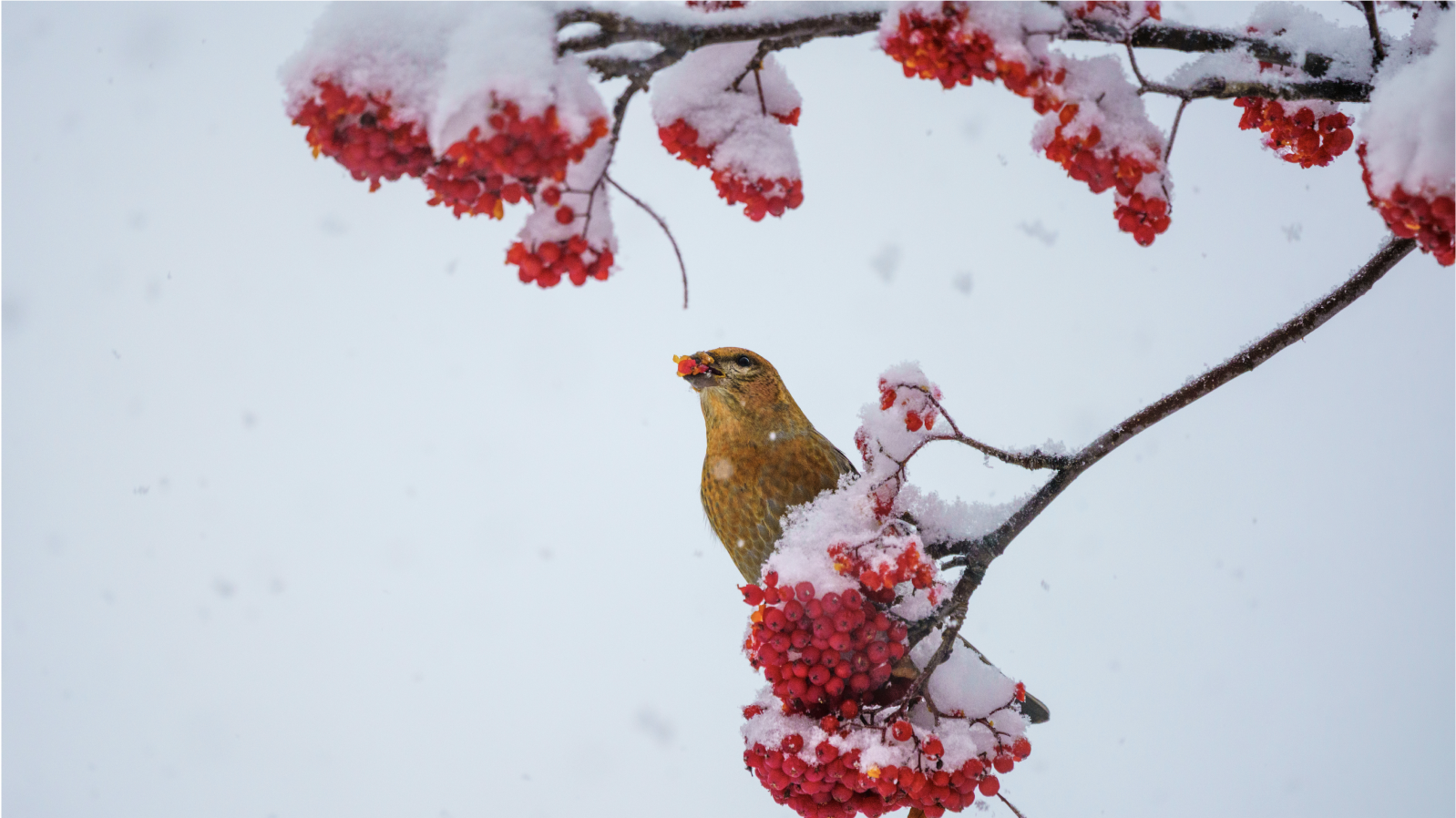
6. Some lower their body temperature at night
On the coldest nights, chickadees let their body temperature drop by about 12 to 15°F, a state called regulated hypothermia. According to the same NWF report, that saves almost 25% of their hourly energy use at freezing temperatures, so their fat lasts until dawn. In the morning, they shiver back up to normal and head out to feed.
7. They roost in sheltered spots, sometimes together
Small birds spend winter nights out of the wind, tucked into tree cavities, dense evergreens and thick shrubs. Some share the space: Eastern Bluebirds, House Wrens and even Black-capped Chickadees sometimes crowd into one tight spot to pool their body heat, as experts at the Smithsonian describe. Ruffed Grouse go further and dive into soft snow to sleep, where the snow shields them from wind and the colder air above.
On sunny afternoons, watch for birds sunbathing, backs to the sun and feathers spread to soak up the warmth.
When winter gets dangerous
Most backyard birds handle freezing temperatures well, as long as they can find enough food and shelter. The real trouble comes from:
- Ice storms. Wet feathers lose their insulation, and ice can seal off the seeds and buds birds rely on.
- Long cold snaps. Several bitter nights in a row leave birds little time to rebuild their fat.
- Deep snow. Ground feeders like Dark-eyed Juncos and sparrows can lose access to fallen seed.
Those are the days your feeder matters most.
Can your feeder help?
Yes, and winter is when it helps most. Wild birds still find most of their food in nature, but in one study described by the National Wildlife Federation, chickadees with access to sunflower seeds at feeders survived severe winters at nearly double the rate of birds relying on wild food alone.
- Offer high-fat food. Black-oil sunflower seed, hulled sunflower hearts, unsalted peanuts and suet give the most energy per bite. Skip bread: it fills birds up without the fat they need.
- Fill up before dusk and at dawn. Those are the two big feeding rushes of a winter day.
- Keep seed dry. Wet, clumped seed spoils fast. Brush snow off the feeder after a storm.
- Leave some natural shelter. Evergreens, thick shrubs, brush piles and standing seed heads give birds windbreaks and extra food.
- Keep squirrels out. When every seed counts, a squirrel-proof setup keeps the food for the birds.
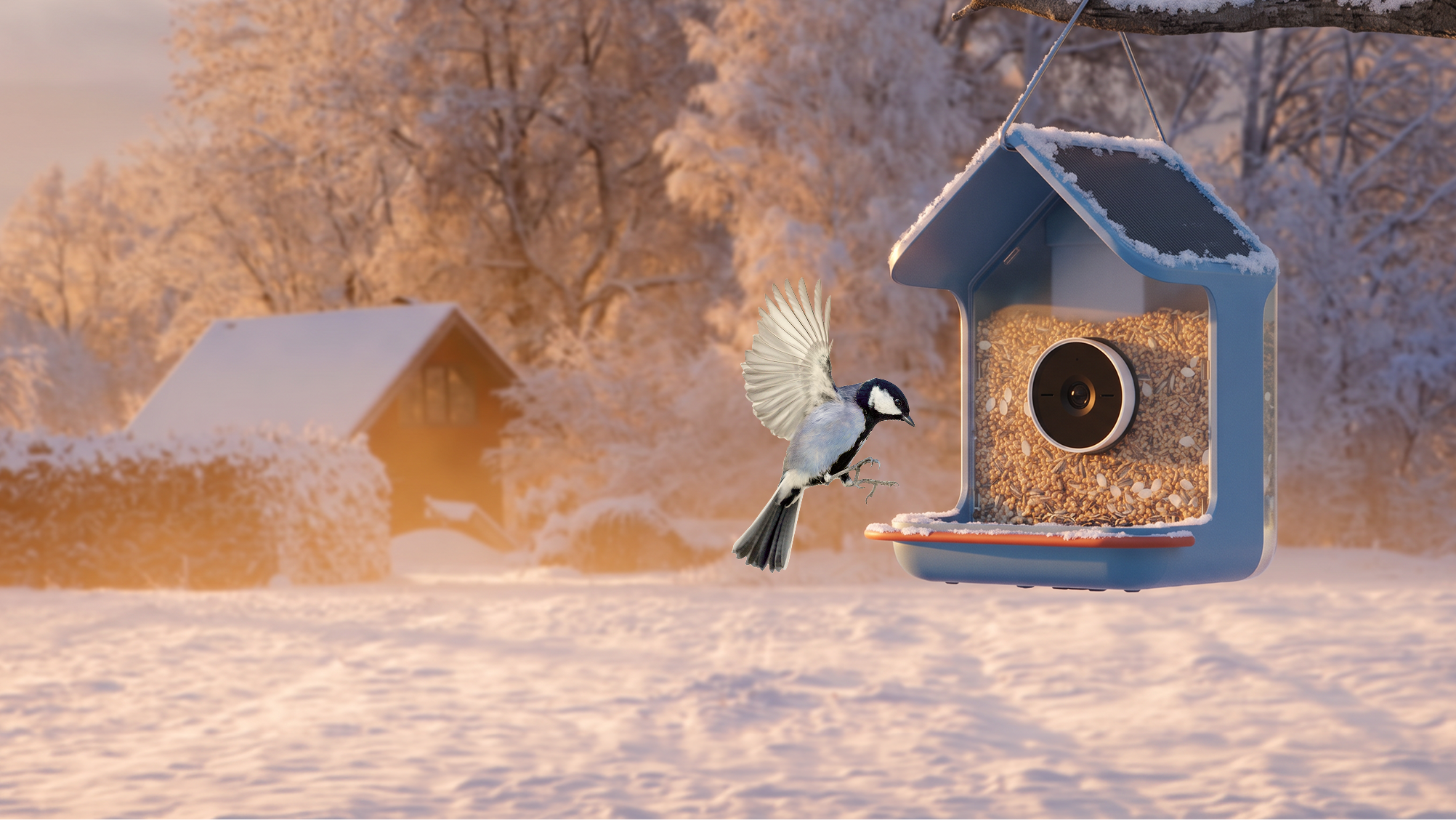
Caught a puffed-up bird on camera?
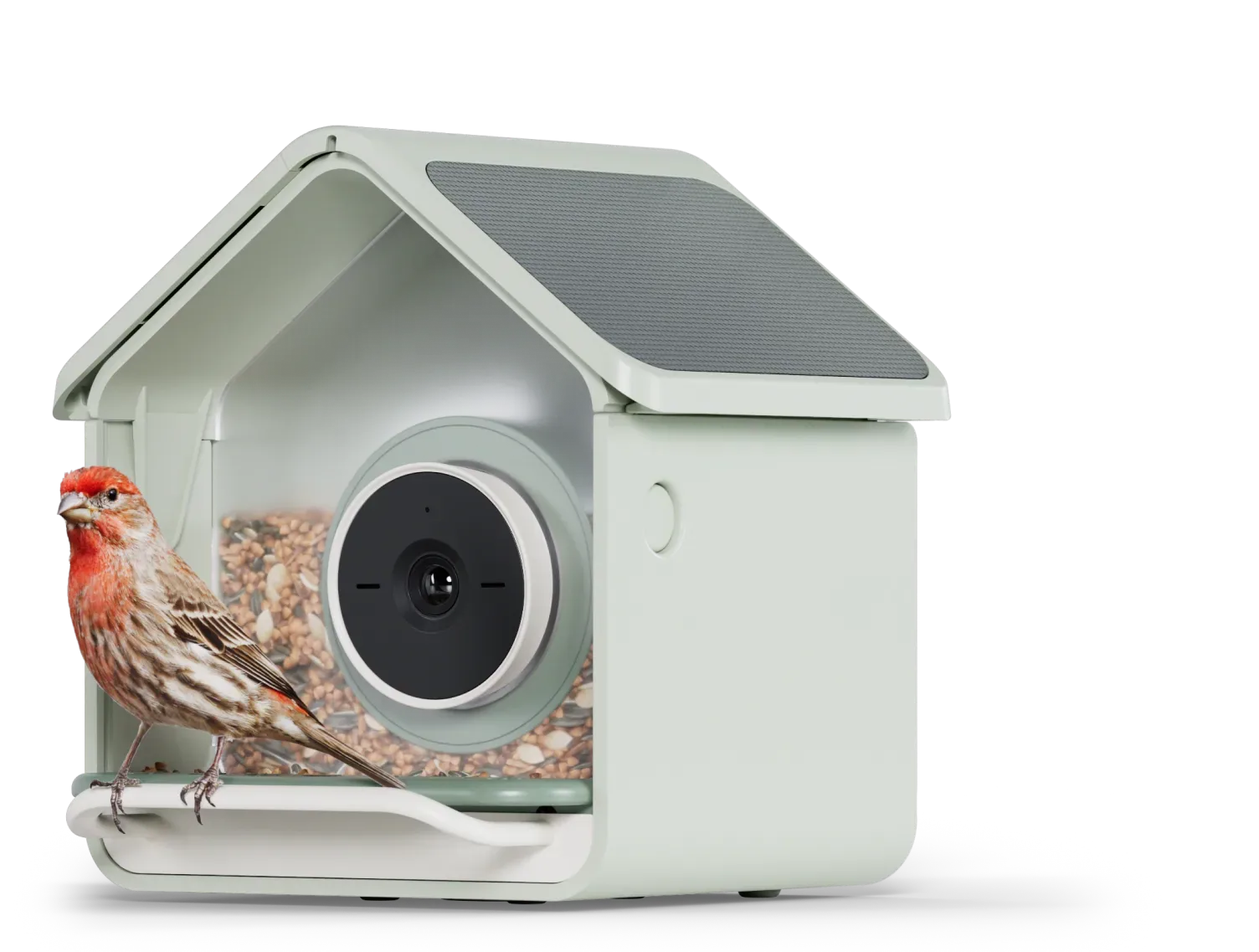
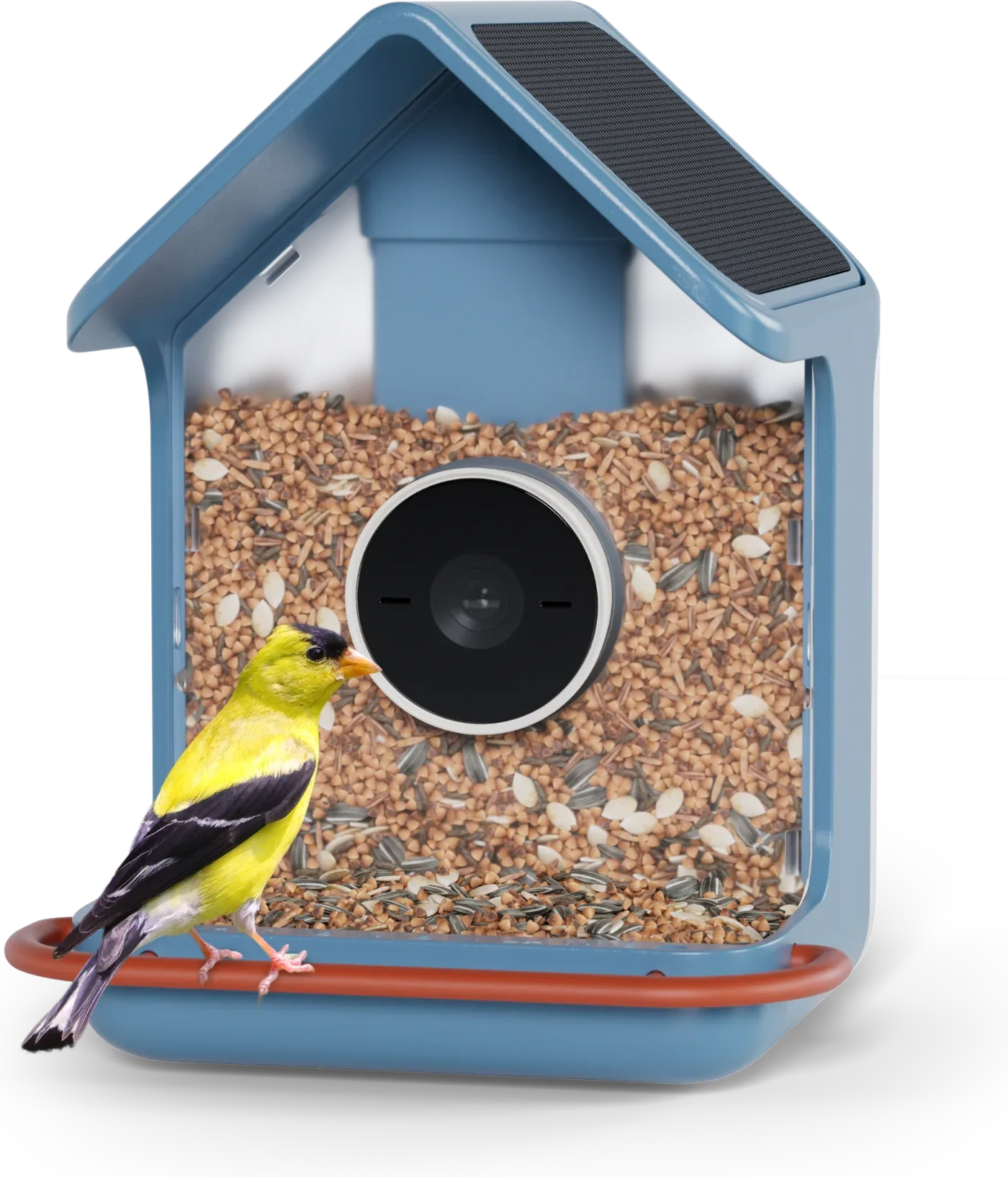
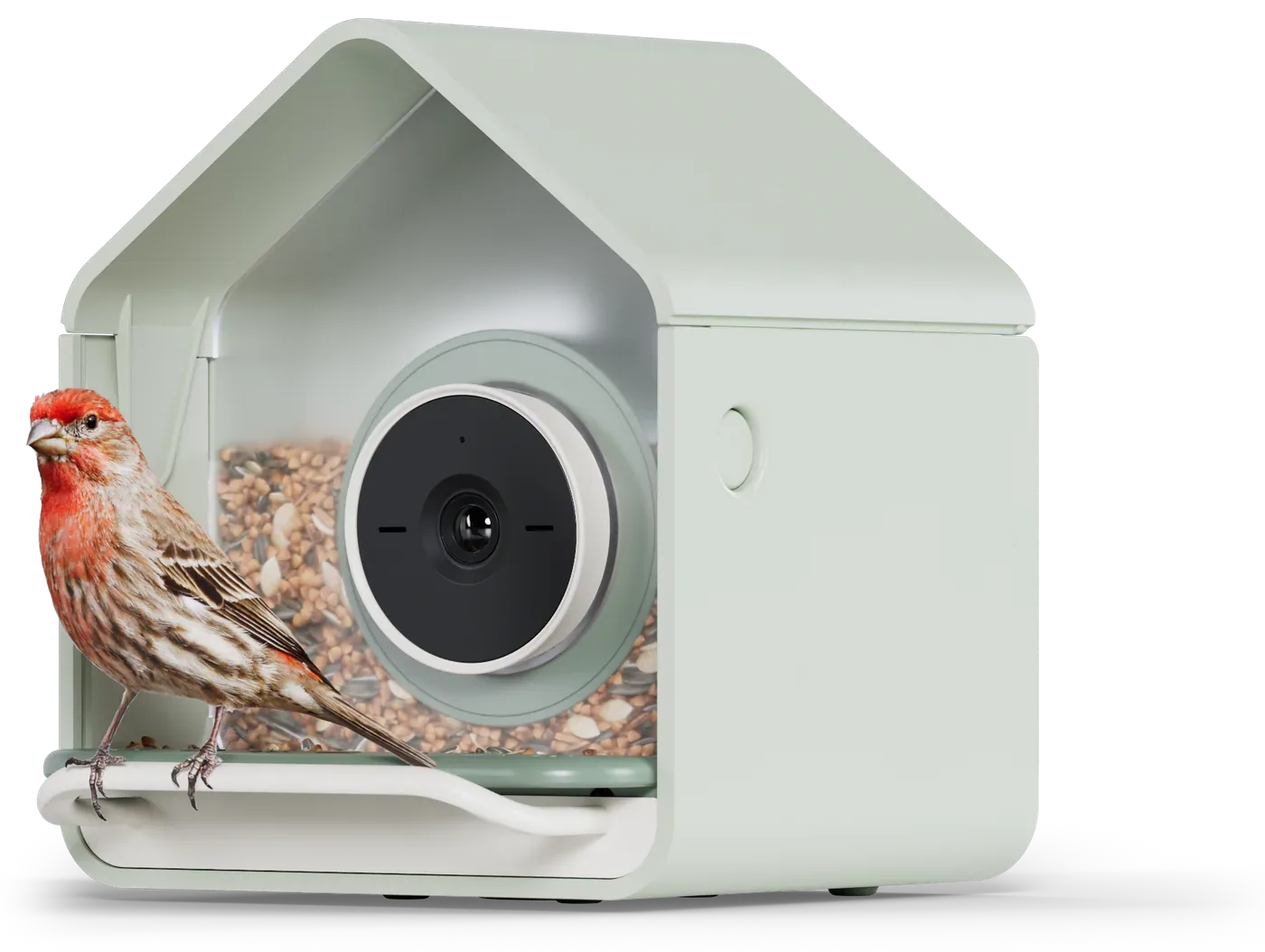
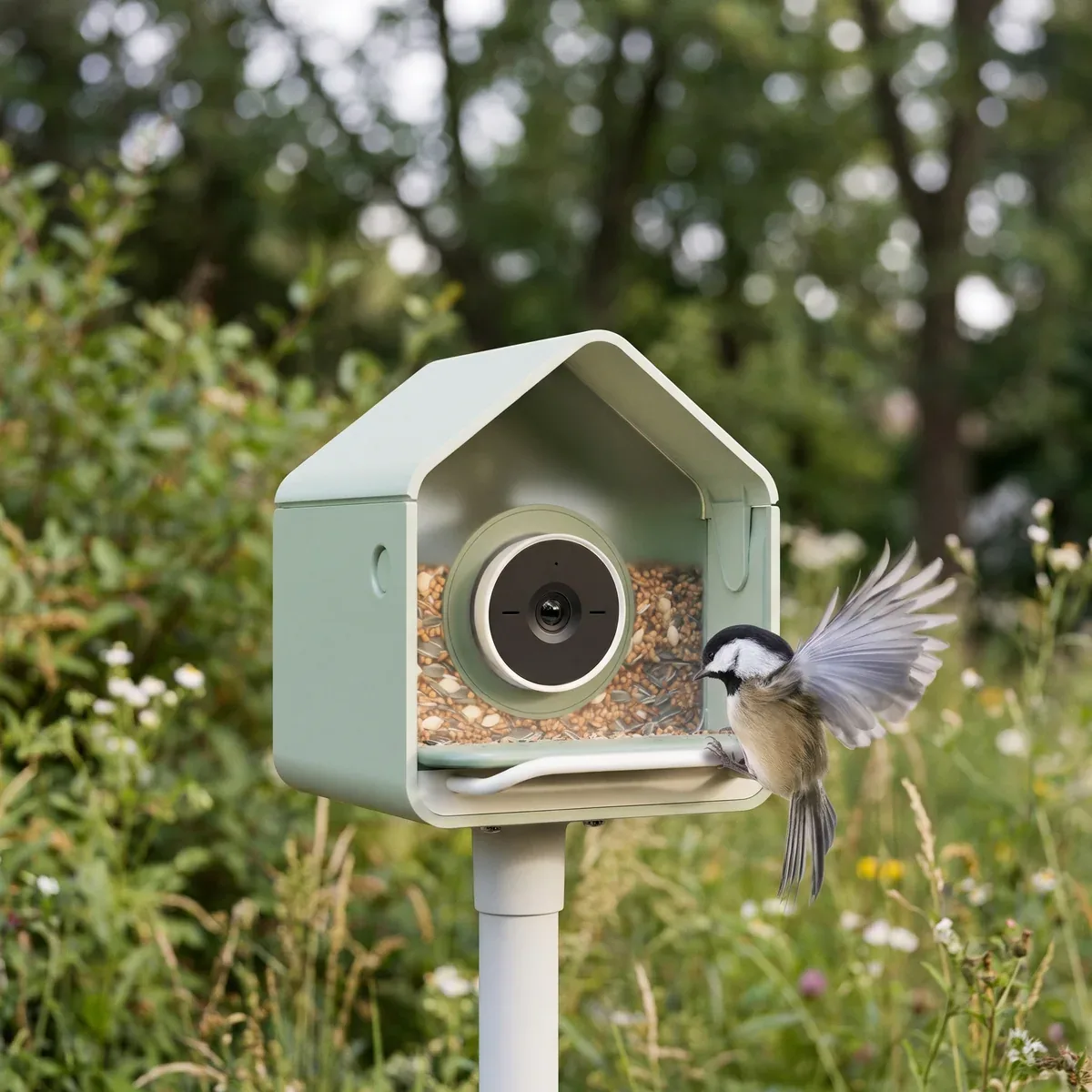
A Birdbuddy camera catches details that are hard to see through a window. You can see a chickadee puffed up to twice its size on a frosty morning, the dawn rush right after sunrise and which species keep showing up on the coldest days. Snapshots of the same regular across a cold snap show how much feeding ramps up when temperatures drop.
Got a fluffed-up visitor on camera? Share it with the Birdbuddy community.
The takeaway
Birds stay warm in winter with a full survival kit: fluffed feathers that trap warm air, legs built to run cold, shivering muscles, fat built up during the day, lower body temperatures at night and sheltered roosts shared with others. Most backyard birds handle the cold well as long as they can find food. Keep your feeder stocked with high-fat food, especially at dawn and dusk.
Frequently asked questions
Do birds get cold in winter?
They feel the cold, but they're built for it. Fluffed feathers trap warm air, shivering makes heat and the fat they eat during the day keeps them going overnight. Most backyard birds handle temperatures well below freezing, as long as they can find food and a sheltered place to sleep.
Can birds freeze to death?
It's rare, but it can happen. The risk is highest when a bird goes into a long, bitter night without enough fat, or when an ice storm soaks its feathers so they stop insulating. A steady food source and a sheltered roost get most birds through even the worst nights.
Why do birds stand on one leg in winter?
To keep half of their bare skin out of the cold. A bird pulls one leg up into its warm belly feathers and balances on the other, switching legs every so often.
Should I keep feeding birds all winter?
Yes. Winter is when your feeder helps most, because natural food is scarce and the days are short. Keep it filled with high-fat food, especially during cold snaps and after storms, when wild food is hardest to find.