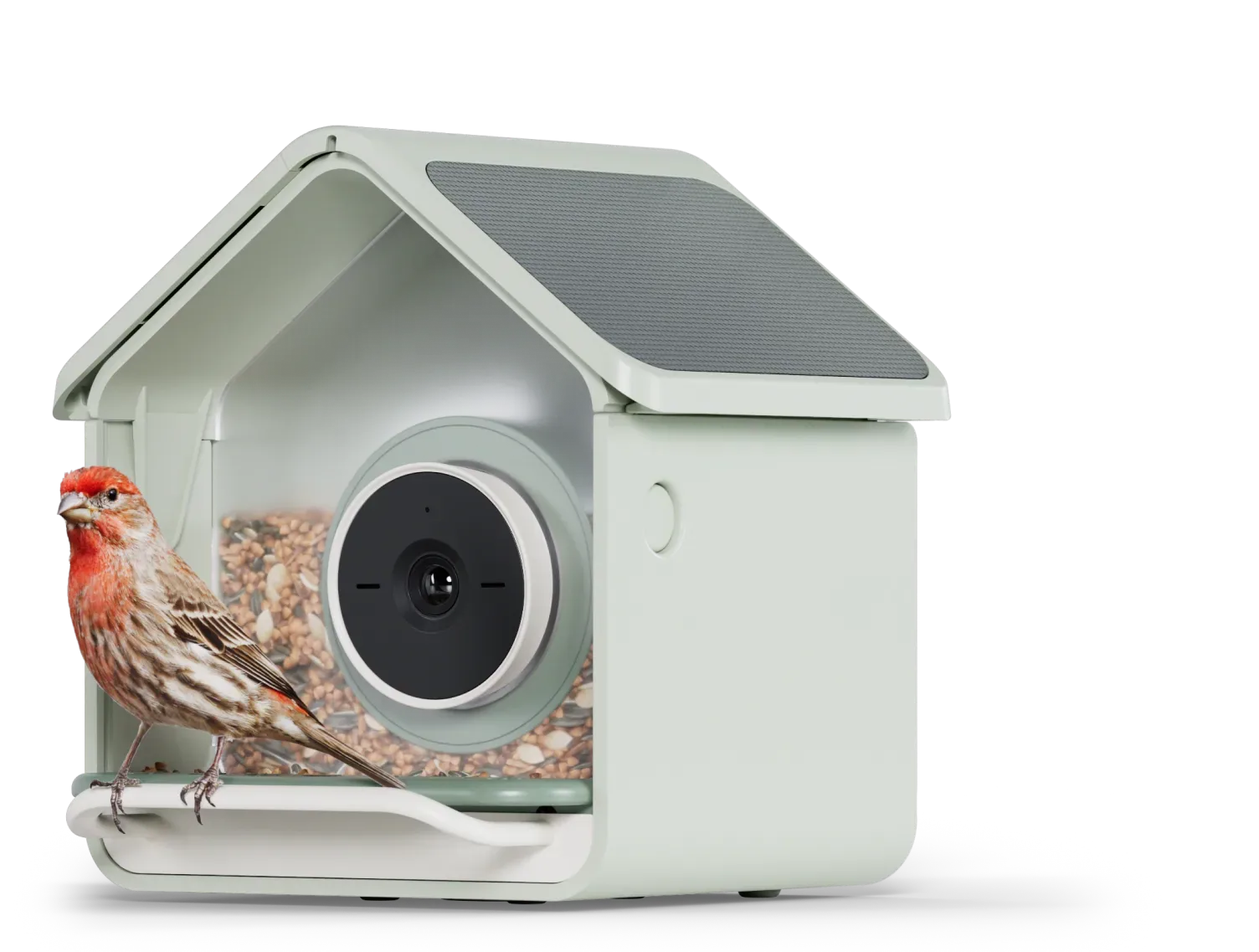
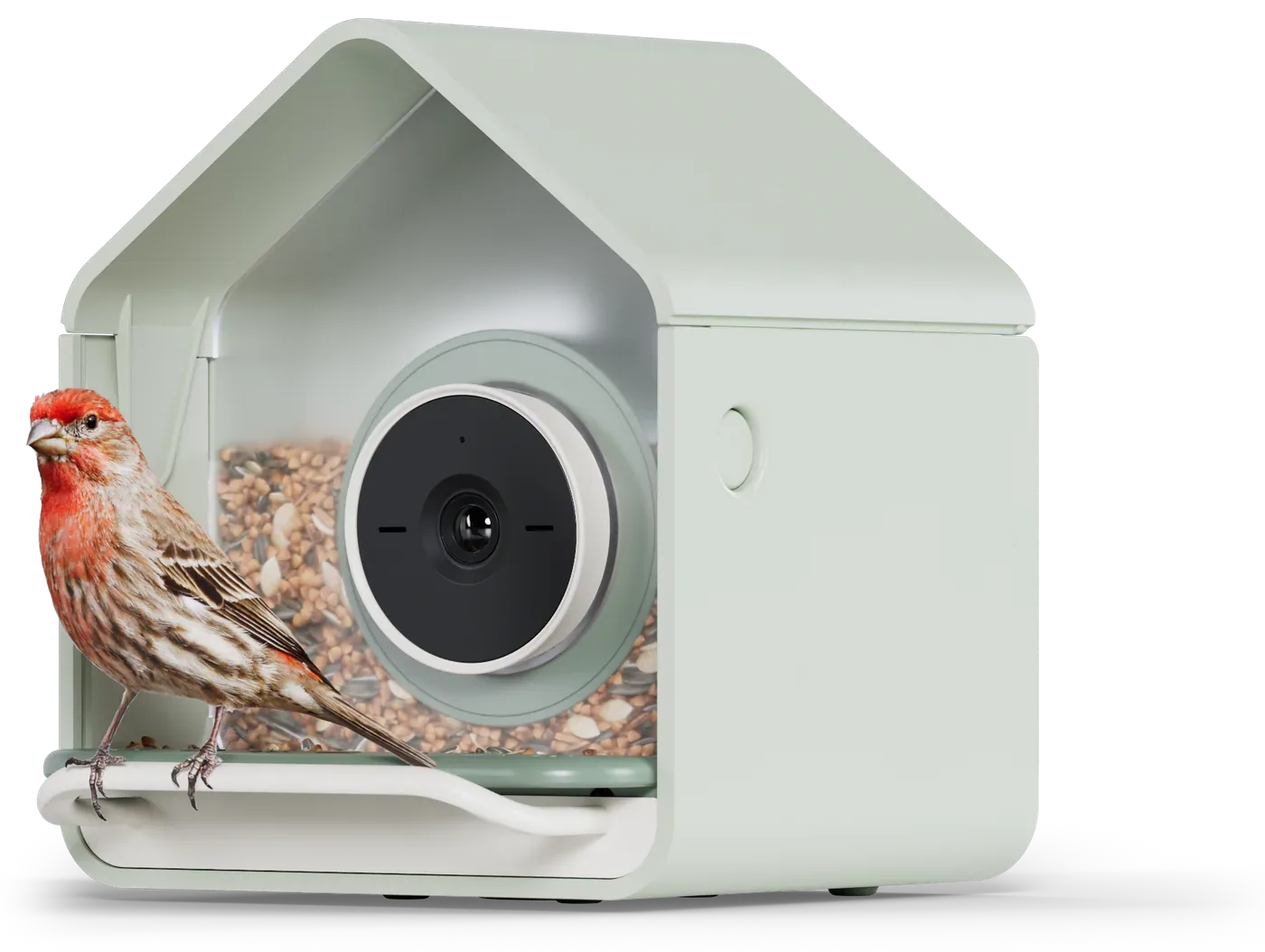
How do you tell a House Finch from a Purple Finch? Look at the sides first. Male House Finches have brown streaks down the flanks and red mostly on the head, chest and rump. Male Purple Finches look washed in raspberry over the head, back and wings, with a plain white belly. Females are easier: a female Purple Finch has a bold white eyebrow, a female House Finch has a plain brown face.
Key takeaways
- Streaked sides mean House Finch; a clean white belly means Purple Finch.
- Purple Finch red is raspberry and spreads over the back and wings; House Finch red sits on the head, chest and rump.
- A white eyebrow and dark cheek mark a female Purple Finch.
- House Finches have long, square tails; Purple Finches have shorter tails with a notch.
Telling the males apart
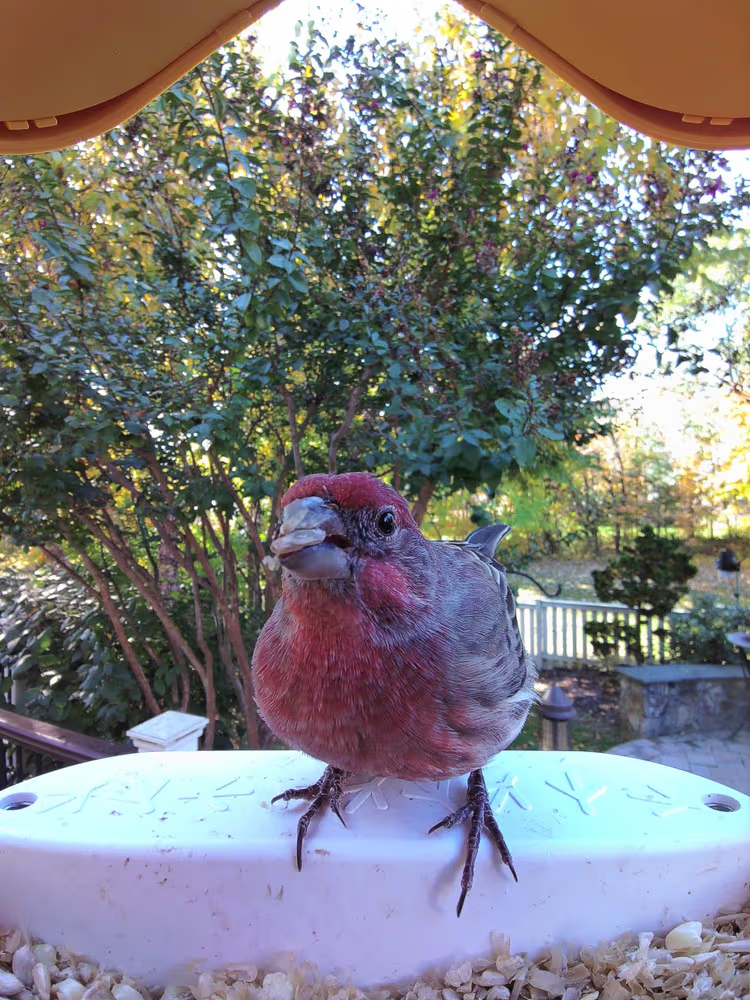
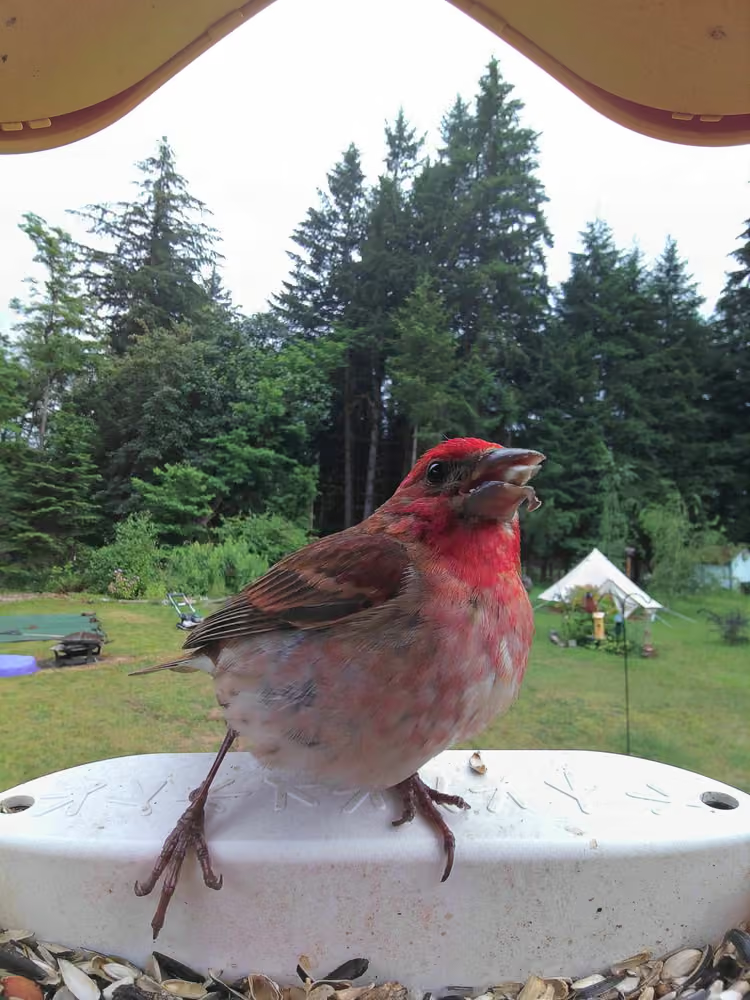
Start with the sides. A male House Finch has bold brown streaks running down his flanks and belly, and his red sits on the head, chest and rump, like a bib and a cap. The Delaware Nature Society, which handles both species at its bird-banding station, points out that on a House Finch the red on the head is mostly on the forehead and over the eyes, so it can look like red eyebrows. The color also varies a lot: some males are bright red, others orange or yellow, depending on their diet.
A male Purple Finch looks washed in color rather than painted in patches. Roger Tory Peterson called him a sparrow "dipped in raspberry juice": the pinkish red spreads over the whole crown, the back and the wings, and the belly is plain white with no crisp streaks.
Telling the females apart
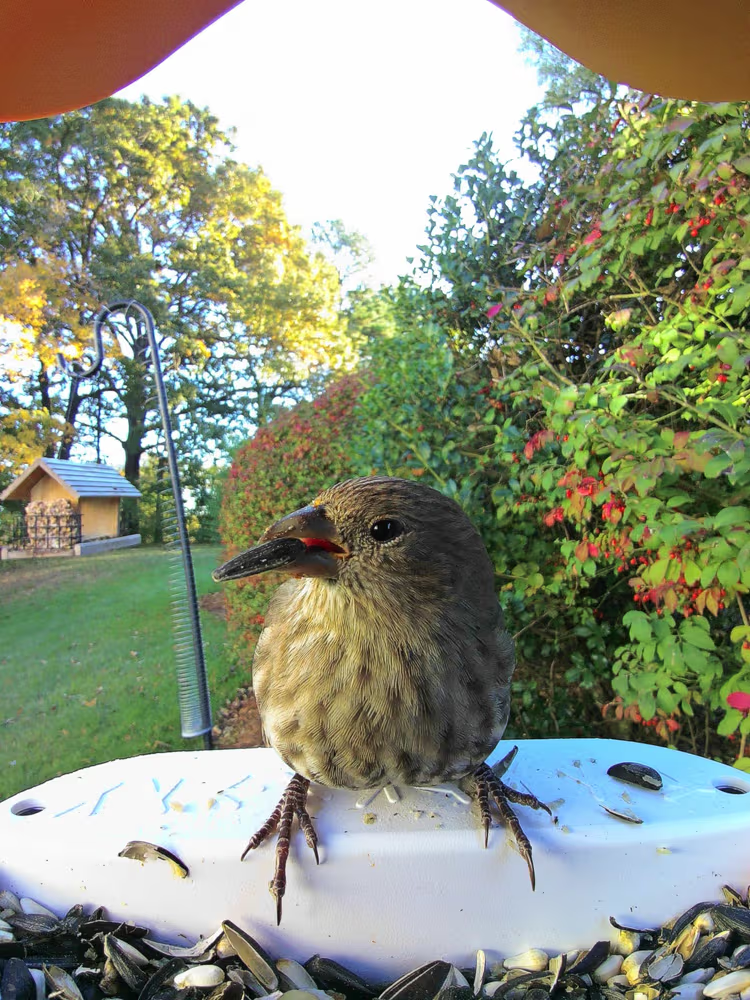
Females of both species are brown and streaky, with no red at all, but the faces differ.
- Female Purple Finch: a bold white eyebrow and a white stripe below a dark brown cheek, with sharp, dark streaks on a whitish chest.
- Female House Finch: a plain, gray-brown face with no strong markings and blurry streaks on the chest and sides.
A quick way to remember it: if the face looks crisp and patterned, think Purple Finch; if it looks soft and plain, think House Finch.
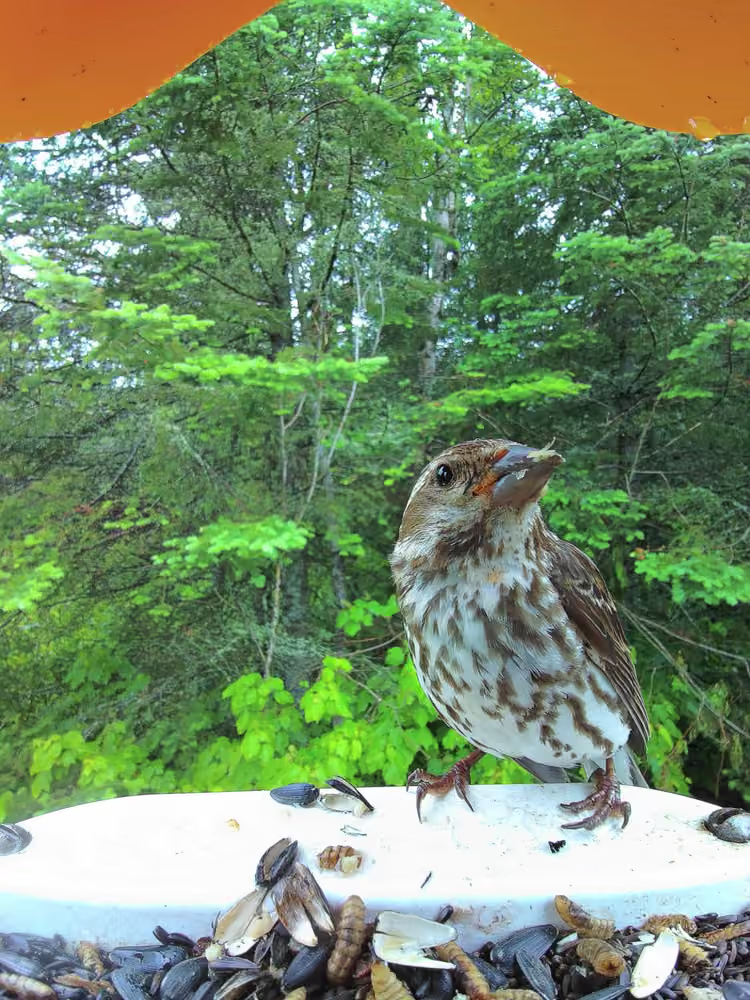
Check the tail and head shape
When the color is hard to judge, look at shape. House Finches have a long tail that's square or slightly rounded at the tip, and a rounded head. Purple Finches have a shorter tail with a clear notch and a flatter head, sometimes with a small peak at the back. From behind, the notched tail is often the giveaway.
Where and when you'll see each one
House Finches live year-round across almost all of the lower 48 states. They were originally western birds: according to the Missouri Department of Conservation, they were introduced on Long Island, New York, in 1940, after being sold as cage birds, and spread across the East from there.
Purple Finches breed in northern forests and along the West Coast, and many move south and east in winter. They're more irregular, appearing at feeders in big numbers some winters and barely at all in others. If this year's winter finch forecast holds for your area, it's a good winter to look for them.
Compare them photo by photo
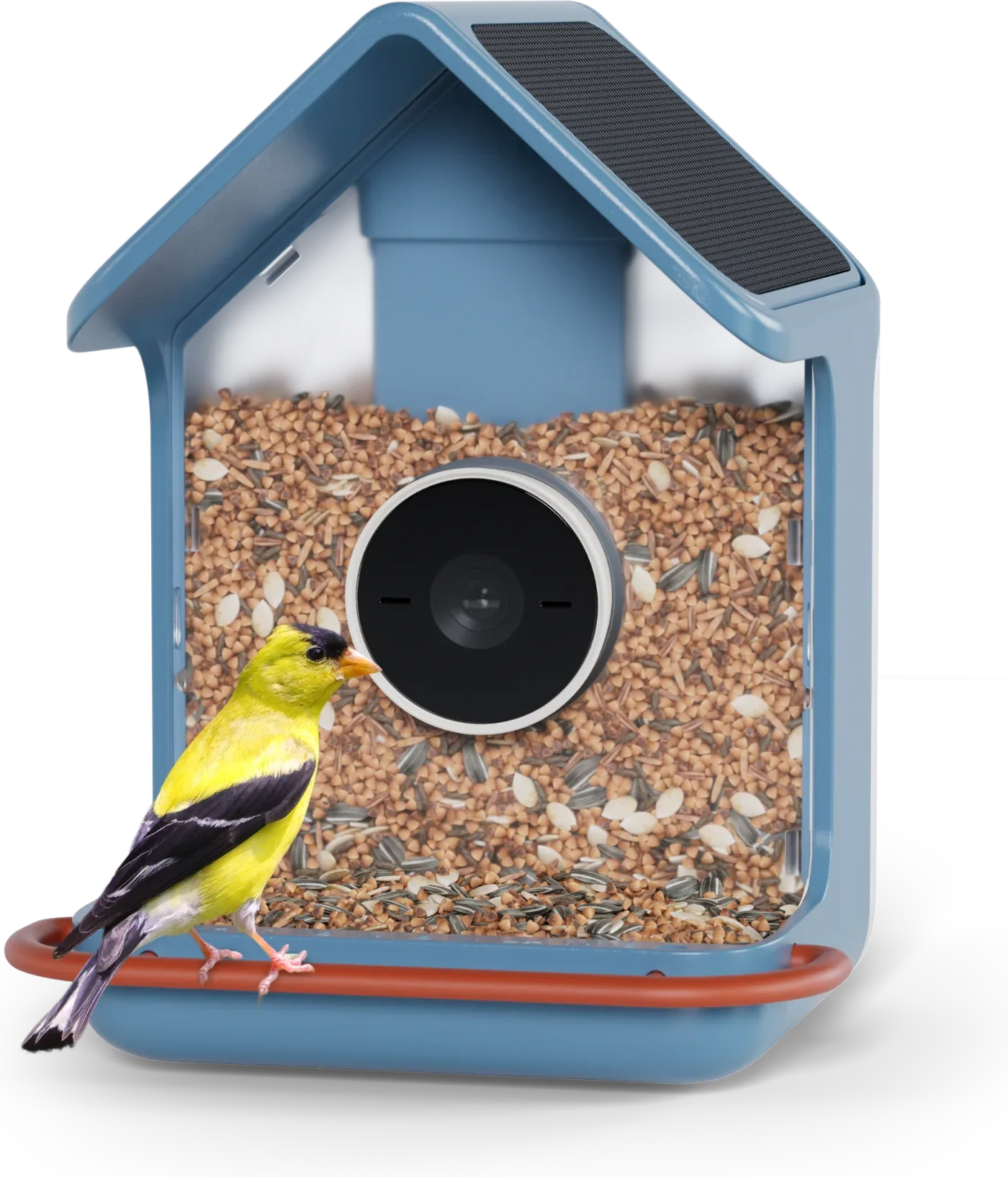
These two are hard to separate through a window, and both move fast. A Birdbuddy smart feeder photographs every finch that lands and suggests the species, so you can zoom in on the flanks, the eyebrow or the tail notch afterward. Over a winter, your gallery becomes a side-by-side reference for your own yard. Think you've photographed both on the same day? Share it with the Birdbuddy community.
The takeaway
To tell a House Finch from a Purple Finch, check the sides: brown streaks mean House Finch, a clean white belly means Purple Finch. Male Purple Finches look dipped in raspberry from head to wings, while House Finch red sits on the head, chest and rump. Females are the easiest: a white eyebrow and dark cheek mark a Purple Finch. When in doubt, look for the Purple Finch's short, notched tail.
Frequently asked questions
Is a Purple Finch actually purple?
No. The color is a pinkish raspberry red. The name comes from the Latin purpureus, which covered a range of reddish colors.
Can House Finches and Purple Finches be at the same feeder?
Yes, especially in winter in the East. They eat the same foods, so black-oil sunflower and nyjer can bring in both. Seeing them side by side is the easiest way to learn the differences.
What's the third red finch I might see?
In the mountain West, Cassin's Finch looks similar, with a bright red cap. See our list of 12 red birds you might see this winter for more look-alikes.