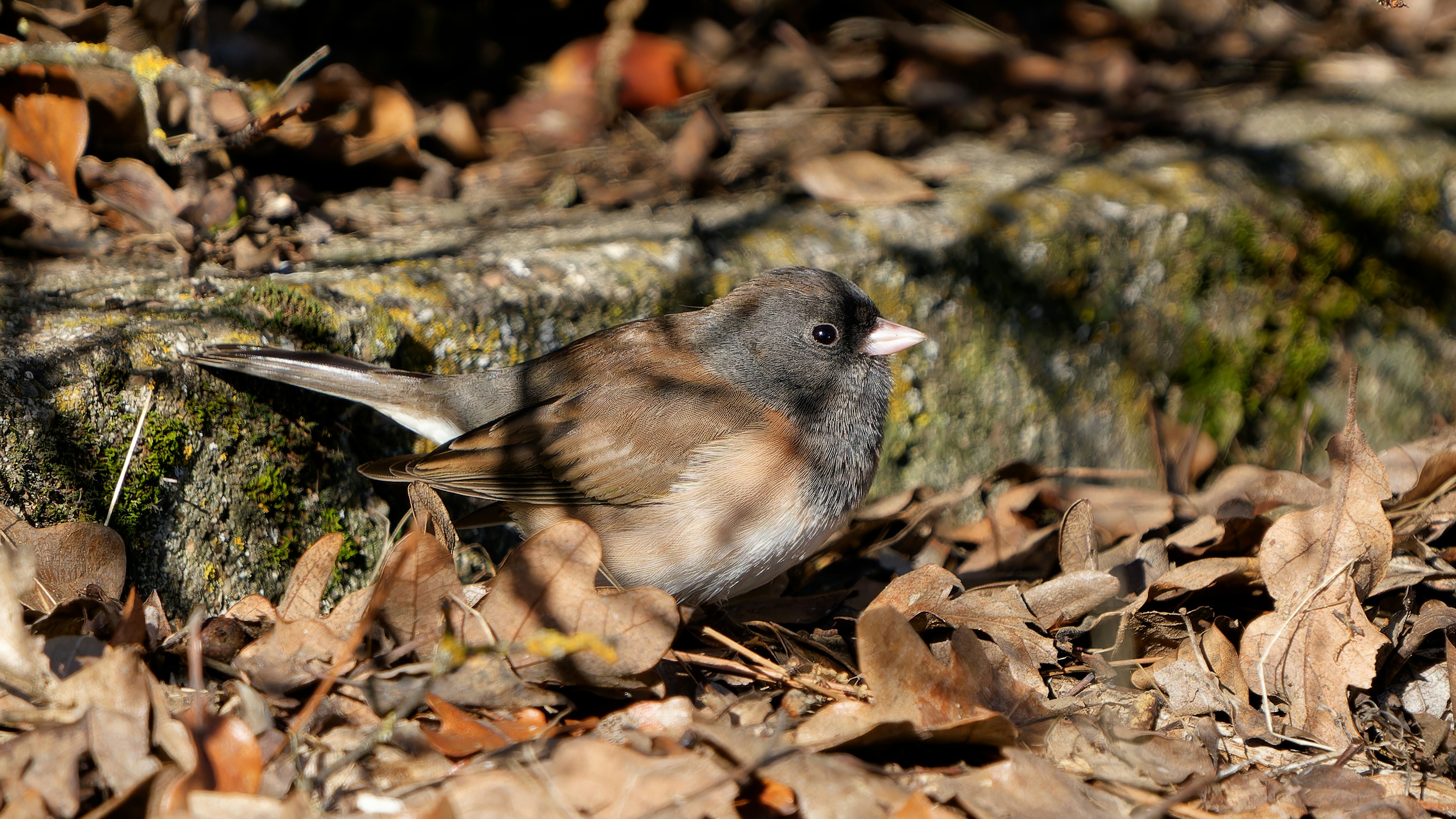
Why they’re called “snowbirds”
Long before retirees heading to Florida took the name, “snowbird” meant the junco. The nickname goes back centuries: in his Natural History of Carolina, Florida and the Bahama Islands, naturalist Mark Catesby called it the “snow bird,” noting that in Virginia and Carolina it appeared only in winter, most often in snow.
Carl Linnaeus later based his scientific description on Catesby’s account, naming the bird Fringilla hyemalis. Today, we know it as Junco hyemalis, but the winter connection remains: hyemalis is Latin for “of the winter.”
The nickname still fits. Across much of the US, migrating juncos arrive as the weather cools and stay until spring. Depending on where you live, the first visitors may appear between September and November, just as mornings start to feel cold. For many backyard birders, the first junco under the feeder feels like a more reliable sign of the season than the weather forecast.

Where they've been all summer
Most of the juncos arriving now spent the summer far to the north. They nest in the forests of Canada and Alaska, then head south for the winter, spreading across most of the lower 48 states until spring. For these birds, “heading south” means wintering in the US, no trip to Central or South America needed.
They also tend to come back to the same places. Juncos often return to the same wintering areas year after year, so the flock under your feeder this month may include some of last winter's regulars. In winter they travel in small flocks with a clear pecking order, and you'll often see a bit of pushing and tail-flashing as they sort out who eats first.
A quick regional note: Not every junco is a winter visitor. If you live in the mountain West or at high elevations in the Appalachian Mountains, juncos may live near you all year. Some populations migrate down to lower elevations rather than move south, a seasonal movement known as “altitudinal migration.” If your juncos never left, that may be why. Cornell Lab’s range map shows where juncos breed, spend the winter and live year-round.
How to recognize a junco
Dark-eyed Juncos belong to the sparrow family: round little birds often seen hopping beneath feeders. But they don’t all wear the same outfit. Cornell Lab describes 15 subspecies, grouped into six recognizable regional forms based on feather color and geography. There’s enough variation that several forms were once considered separate species.
Start with these clues:
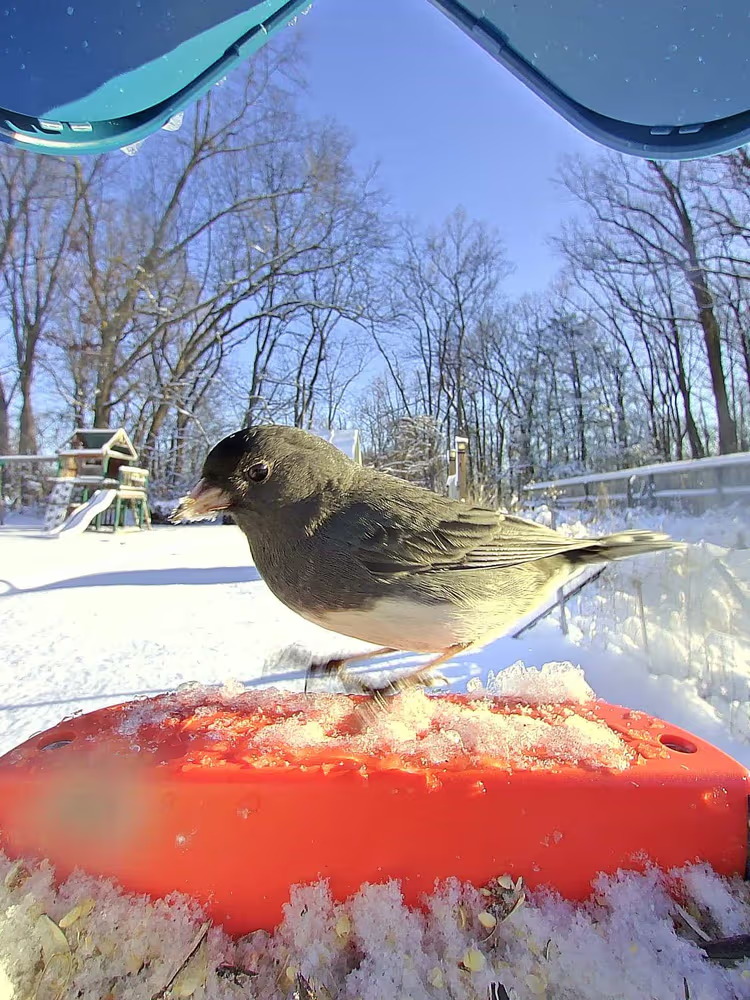
- White outer tail feathers that flash when the bird flies off—the best first clue across the different forms.
- A short, pale bill, usually pinkish, though its color varies.
- A round body and a relatively long tail.
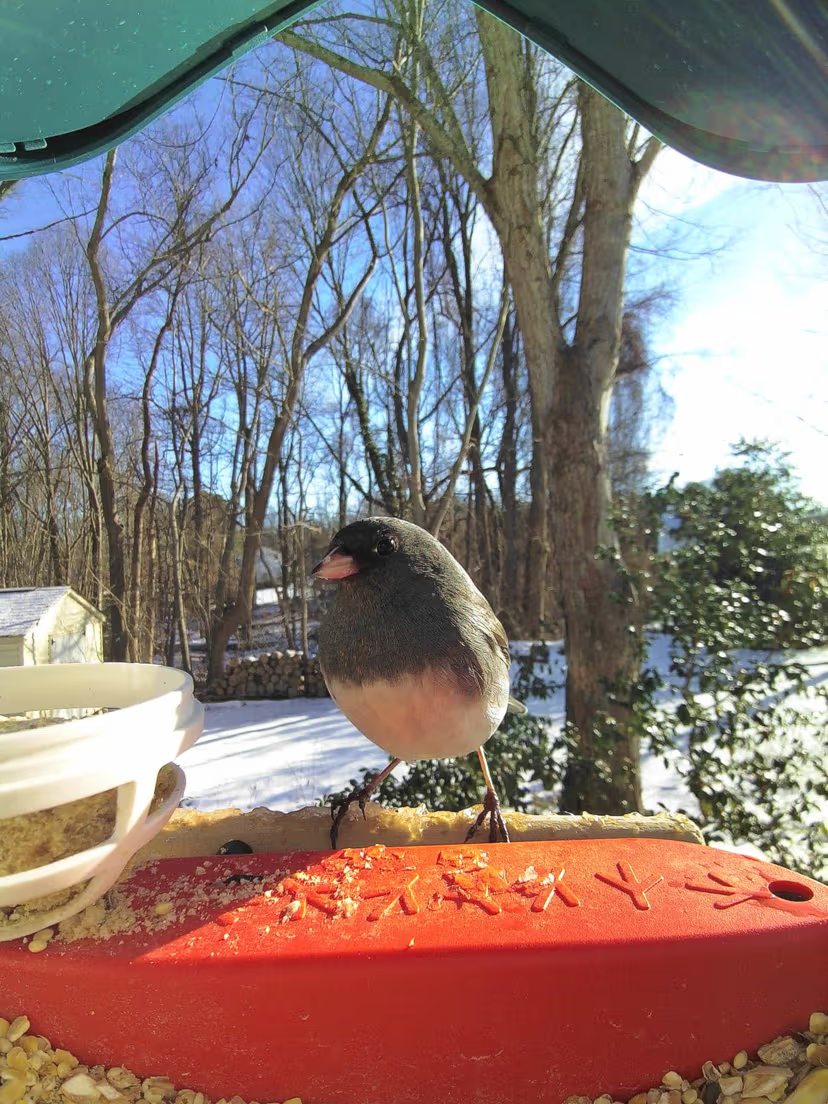
Then look at the colors. In the East, the most common form is Slate-colored, with a slate-gray head, back and chest contrasting with a clean white belly. In much of the West, Oregon juncos have a darker hood, a brown back and warm brown sides.
The other regional forms are Pink-sided, White-winged, Gray-headed and Red-backed, so birds in the Great Plains, Rockies and Southwest may look quite different from their eastern relatives. Females and young birds are often softer in color, and some birds show a mix of features. Cornell Lab’s identification guide can help you compare them.
Their behavior helps too. Juncos usually forage in flocks, hopping and scratching through leaves and fallen seed below your feeder. If a flock of birds with pinkish bills and flashing white outer tail feathers gathers under the feeder one day out of nowhere, you’re probably looking at juncos.
Different regions, different looks. Dark-eyed Juncos come in several regional forms, so the ones near you may look quite different from their eastern relatives:
- Much of the West: Oregon juncos have a black or dark gray hood, a brown back and warm pinkish-brown sides.
- The Rockies: Pink-sided juncos have a gray hood and broad pinkish sides, while Gray-headed juncos have a gray head and body with a reddish-brown back.
- The Southwest: Red-backed juncos have a gray head and body with a reddish back.
- The Black Hills of the Dakotas and nearby Great Plains: White-winged juncos have gray plumage with white wing bars.
These forms can overlap, especially in winter. If your juncos don’t match the description above, you may simply be looking at a different regional form.
Is it really a junco?
A few birds can look similar, especially at a glance:
- Spotted Towhee (West): With their rusty sides, Spotted Towhees can be confused with Oregon Dark-eyed Juncos. Towhees are much larger, with bold white spots on their wings and back, bright rufous flanks and red eyes. Males have a black head and back, while Oregon juncos have a brown back.
- Eastern Towhee: another dark-plumaged, ground-foraging member of the sparrow family but it's much bigger, with rusty-orange sides, red eyes, long, strong legs, and a black (not gray) hood (on males).
- Black Phoebe (West): Has similarly dark plumage and a white belly, but its thin black bill contrasts with a junco’s thick, chunky, usually pinkish bill. It also lacks the junco’s white outer tail feathers. Watch its behavior: phoebes swoop from perches to catch insects in flight, rather than hopping and scratching for seeds beneath your feeder.
- Other sparrows: Juncos belong to the sparrow family, too. Many other sparrows have streaky breasts or patterned faces, while juncos usually have a cleaner-looking belly. Look for their chunky, pale bill and flashing white outer tail feathers, since plumage varies between regional forms.
See comparison to other species they are often mistaken for.
What juncos like to eat
Since juncos feed on the ground, a hanging feeder full of sunflower seed may not attract them much. They'll pick up what falls, but you can do better.
- White proso millet is their favorite. Scatter it on the ground or put it on a low platform tray.
- Finely cracked corn and hulled sunflower hearts are good additions, especially in cold weather.
- Cover nearby. Juncos like a shrub, brush pile or hedge close by so they can dart in when a hawk passes.
- Offer fresh seed on the ground. Scatter a little millet or seed on a bare patch near shrubs or other cover. A spot close to a feeder birds already visit can help juncos discover it. Offer small amounts and remove leftovers before they become wet or moldy.
- Keep feeding spots clean. Regularly clear away seed hulls, old seed and droppings beneath hanging feeders, especially during wet or snowy weather. This helps reduce disease risk and discourages pests such as rats.
On snowy mornings, clear a small patch of ground or put out a tray. Juncos will find it quickly.

Catch the moment they arrive
Part of the fun of juncos is noticing the day they come back. But since they feed low and blend in with fallen leaves, it's easy to miss the exact day they arrive.
That's where Birdbuddy helps. When a junco lands at your feeder, Birdbuddy snaps a photo, identifies it and adds it to your collection. You'll know the day your snowbirds arrived. Next year, you can compare dates and see if they come earlier or later.
Have your juncos arrived yet? Share your first junco of the season with the Birdbuddy community. We'd love to see who's back in your yard.
The takeaway
Juncos are a sign that winter is on its way. They're small, sociable, easy to recognize and very loyal to good feeding spots. Scatter some millet on the ground in a bare patch near vegetative cover, keep some cover nearby and look for that flash of white tail feathers. For most of the country, your snowbirds are back for the winter.