Start with placement
Almost every squirrel-proofing success comes from good placement. Squirrels are impressive athletes, so the goal is to put the feeder out of their reach.
The classic guideline is the 5-7-9 rule:
- 5 feet off the ground, since that's about as high as most squirrels can jump from the ground
- 7 feet from anything a squirrel could jump sideways from, like a fence, railing, deck or wall
- 9 feet below anything a squirrel could drop from, like overhanging branches, gutters or eaves
It's a good starting point, but plenty of squirrels can do better. Cornell's Project FeederWatch estimates that squirrels can jump about 8 feet sideways and drop about 11 feet from above. That's why many experts, including Birds & Blooms, recommend a simpler rule: keep the feeder at least 10 feet from any jumping-off point. If you can manage that and keep the feeder at least 5 feet off the ground, you'll stop most squirrels.
Before you settle on a spot, look at the area the way a squirrel would. Is there a branch, a fence or a roof edge they could jump from? That's often the route they're using.
Add a baffle (and put it in the right place)
A baffle is a dome- or cone-shaped shield on a feeder pole that stops squirrels from climbing up from the ground. It's one of the most effective tools you can use, as long as it's installed correctly.
- On a pole: Mount the baffle about 4 to 5 feet off the ground, below the feeder. The pole should be smooth and stand alone, at least 10 feet from anything a squirrel could jump from. A baffle doesn't help if the squirrel can just jump over it.
- On a hanging feeder: A dome baffle above the feeder can stop squirrels from climbing down from a branch or hook. This works best when the feeder hangs well below the branch.
Keep in mind that a baffle only blocks squirrels climbing up the pole. Good placement is still what keeps them from jumping onto the feeder from somewhere else.

Choose foods squirrels don't like
Seed choice can make a big difference with little effort. Squirrels usually aren't interested in:
- Safflower seed. Cardinals, titmice, chickadees, House Finches and doves eat it happily, while many squirrels, grackles and starlings tend to leave it alone. It's a great option if squirrels keep emptying a sunflower feeder.
- Nyjer (thistle). It's a favorite of finches, and most squirrels ignore it.
- White proso millet. Juncos, sparrows and doves like it, and squirrels show little interest.
Some squirrels do learn to eat safflower, so it's not a guarantee, but it discourages many of them. Choosing hulled or no-mess seed also helps, since less seed on the ground means less to attract squirrels in the first place.
The wire-and-bottle trick
If you have two sturdy trees or poles at least 20 feet apart, you can hang the feeder from a wire stretched between them. Keep it at least 5 feet off the ground and at least 10 feet from each end of the wire. Then slide empty plastic soda bottles or lengths of PVC pipe onto the wire on either side of the feeder. When a squirrel tries to walk the wire, the bottles spin under its feet.
Or give squirrels their own feeder
Not everyone wants to fight squirrels, and that's a reasonable choice. Some people think squirrels shouldn't be fed at all, since wild animals don't need our help to get through the winter. Others enjoy squirrels as much as they enjoy birds.
If you'd like a middle ground, set up a separate squirrel feeder. Penn State Extension suggests offering dried corn on the cob, peanuts or cracked corn somewhere well away from your bird feeders. Put it on the far side of the yard, preferably near their favorite trees, so they have an easier option than your feeder.
This works best when paired with the other tips. A squirrel with its own food and a well-protected bird feeder will usually just eat the easy food.

What not to do
Some squirrel "solutions" do more harm than good. Please avoid:
- Grease, oil or sticky coatings on poles. They get on feathers and fur, can't be easily cleaned off and can seriously harm both squirrels and birds.
- Glue traps, poison or adhesives of any kind. They're cruel, risky for pets and other wildlife, and often illegal.
- Mixing your own spice powders into seed. Birds can’t taste capsaicin, but common tabletop chili powder is unlikely to deter squirrels effectively; that typically takes much more concentrated capsaicin. Homemade mixes are hard to measure, and the powder can irritate eyes. A well-placed feeder with a baffle works better.
Keep the area under the feeder clean
Spilled seed on the ground attracts squirrels, and other rodents too. Sweep up or rake under your feeder regularly, and clean the feeder about every two weeks. It's good for the birds as well, since a clean feeding area helps prevent disease.
Squirrel-proofing your Birdbuddy
These tips work with any way you mount your Birdbuddy:
- On a pole: This is the most squirrel-resistant setup. Use a pole at least 5 feet tall, add a baffle below the feeder and keep it more than 10 feet from trees, fences and roofs.
- Hanging: Hang it well below the branch, add a dome baffle above it, and make sure it's out of jumping range of the trunk and nearby branches.
- On a wall: Look for windowsills, gutters, railings or climbing plants a squirrel could use to reach it, and choose a spot that's hard to reach from those.
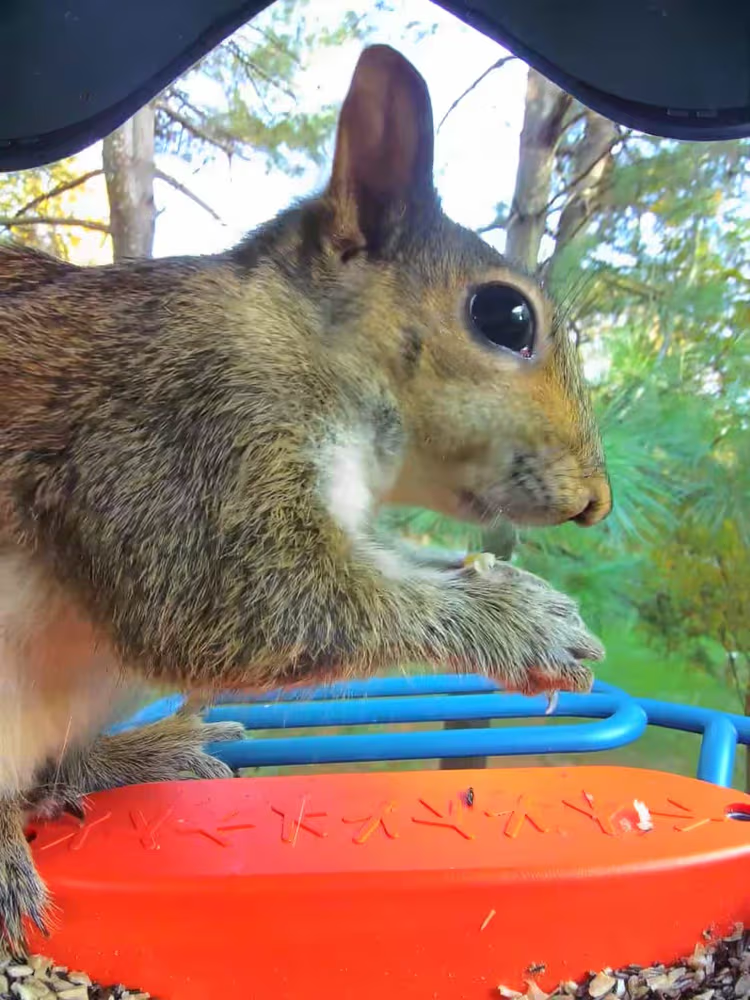
And if a squirrel does get through, at least you'll get the video. Some of the most-loved Birdbuddy clips show a determined squirrel pressed up against the camera. Watching how they reach your feeder also helps: the footage often reveals the jumping-off point you missed.
The takeaway
Fall squirrels are hungry and determined, but they're not unbeatable. Keep feeders at least 10 feet from anything they could jump from and at least 5 feet off the ground. Add a properly placed baffle and switch to safflower, nyjer or millet if squirrels keep raiding. If you enjoy having squirrels around, give them their own food across the yard, and your birds can eat in peace.