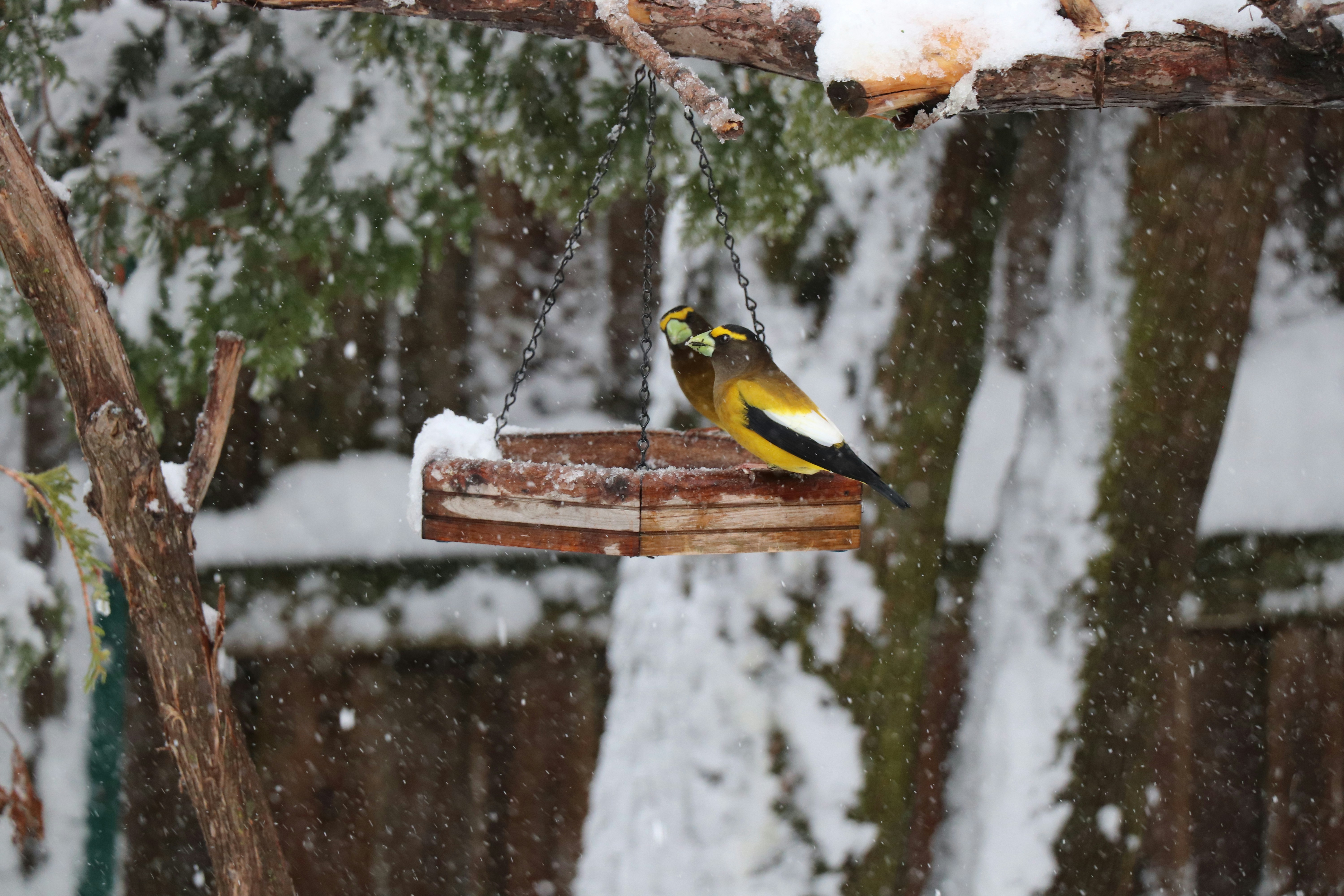
What the Winter Finch Forecast is

The Winter Finch Forecast isn't a government report or a computer model. It's a volunteer-driven effort coordinated by the Finch Research Network, with contributions from more than 30 dedicated birders and researchers. What began nearly 30 years ago as a small initiative among Ontario birders has grown into an international citizen science effort with real scientific value. Today, the Forecast is an eagerly anticipated annual tradition for North American birders, built on decades of observations and the collective work of passionate volunteers.
The forecast starts with food. For seed-eating finches like grosbeaks, redpolls, siskins and crossbills, Canada's vast boreal forest can be a winter paradise, but only when food is plentiful. Coniferous trees produce cones and seeds in cycles, with some years bringing enormous crops and others very little. In a good year, abundant food can support a population boom. But when the following year's seed crop fails, all those extra birds are left searching for food. This can trigger an irruption, a large-scale movement of birds beyond their usual wintering range in search of better feeding opportunities.
To predict these movements, a network of foresters, naturalists and birders across northern Canada reports on cone, seed and berry crops each summer. Forecasters combine these reports with bird observations from eBird to understand where food is plentiful, where it's scarce and which finches might head south for the winter.
A poor crop means hungry birds, which head south in a big movement called an an irregular, large-scale southward movement of birds beyond their typical wintering range. A good crop means most of them stay put.
This year: food is plentiful up north, so most finches stay there
This year's Winter Finch Forecast is mixed. Seed and cone crops are good in the east and far west of the boreal forest, but poor in the middle. And while seeds are a major part of their diet, some finches also enjoy insects. This year, outbreaks of spruce budworm across eastern Canada are providing an additional food source for species like Evening Grosbeaks, Pine Siskins and Purple Finches, giving them another reason to stay put rather than head south.
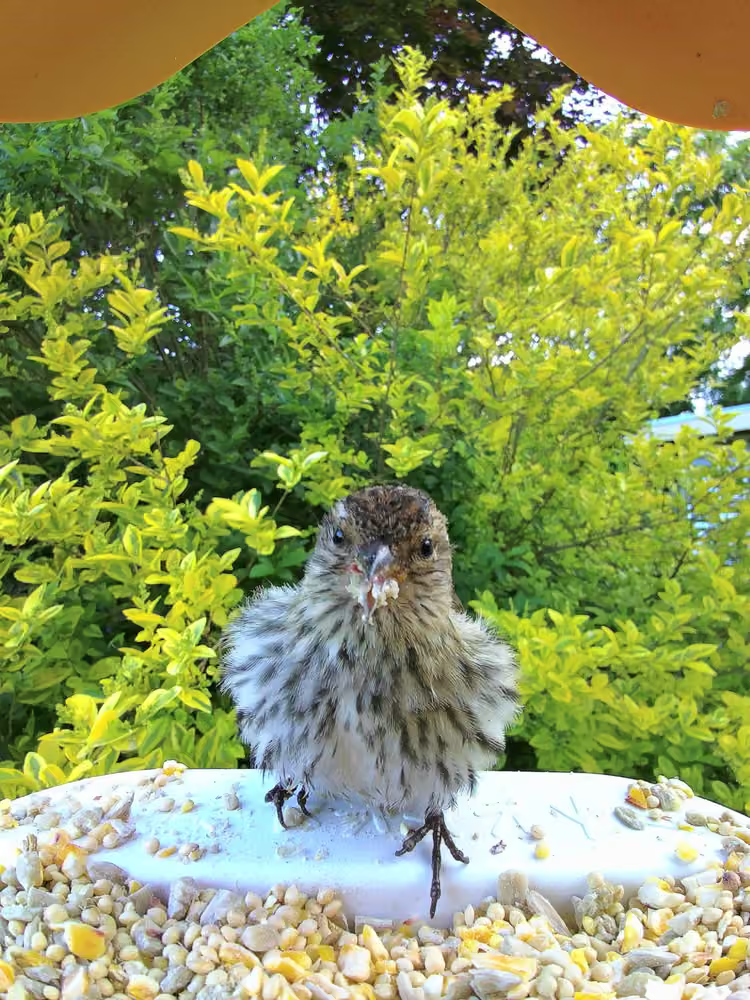
For people with backyard feeders, the key point is that the good crops are in the northeastern US and eastern Canada. That's the region southbound finches normally move through. With so much food there, most of these birds are expected to stay in the forests and not come to feeders. As the forecast puts it, birds "will likely be in the woods more than at feeders."
Here's the species-by-species outlook:
Several other species are included in the forecast too. Red-breasted Nuthatches irrupted as far as the Gulf Coast last winter, but they're expected to mostly stay north this year. Bohemian Waxwings should also stay mainly in the north. Meanwhile, jay activity around the Great Lakes has been impressive, with more than 13,000 counted at Hawk Ridge in Duluth, Minnesota, on September 16 alone. However, it's difficult to tell how many of these birds are local residents and how many are actually irrupting, so these high numbers don't necessarily mean we're in for a big jay year.
The one to watch: Crossbills

If you want some excitement this winter, keep an eye on crossbills. These finches have crossed bill tips that help them pry seeds from conifer cones. Red Crossbills are especially interesting because they can be divided into different "call types" based on subtle differences in the sounds they make. These types are difficult to tell apart by appearance alone, but each has its own distinctive calls, feeding preferences and movement patterns.
This winter, a major irruption of "Type 2" Red Crossbills is moving east after cone crops failed in the western US. They're expected mostly around the western Great Lakes, while "Type 12" Red Crossbills should be more common in the northeastern US. So if crossbills show up near you, listen closely. Their calls might help you figure out which type has come to visit.
Crossbills don't usually come to feeders. Look for them in spruce, pine and hemlock trees with lots of cones, especially in the Great Lakes region and the Northeast. If you have mature conifers in your yard, listen for their short, sharp flight calls overhead. Red Crossbill "types" can only be told apart by recording those calls, so it's a good winter to try recording birdsong.
Why you can trust a "quiet" forecast
A quiet forecast might sound less exciting, but it helps to know it's a well-grounded one. The forecast's biggest success was in 2020-21, when it correctly predicted a "superflight." That winter, boreal finches showed up at feeders across much of the US in numbers many birders had never seen.
No forecast is perfect, and it describes broad patterns rather than what will happen in any one yard. But it's built on real crop reports and real bird movements, so it's the best guide available for what the winter will bring.
"Quiet" doesn't mean "none"
Even in a quiet year, individual birds wander. A small group of redpolls, a few Evening Grosbeaks or a late group of Purple Finches could still show up far from where the forecast expects them. Being ready costs very little:
- Keep black-oil sunflower seed stocked. It's the favorite of grosbeaks and Purple Finches, and it keeps your regular visitors happy anyway.
- Put up a nyjer feeder if you're in the northern US. It's the best food for redpolls and siskins, and goldfinches will use it until they arrive.
- Offer a platform or open feeding area. Evening Grosbeaks are big, social birds that prefer room to spread out over small perches.
- Keep feeders clean. Pine Siskins are especially prone to salmonella outbreaks when they gather in large numbers. Clean feeders about every two weeks. If you see sick birds, take the feeders down for a while.
- Plant for next year. Mountain-ash, crabapples and native conifers give winter finches food even when your feeder is empty.
Help track this winter
Forecasts get better with more bird observations, and you can help! If a grosbeak, redpoll or siskin shows up in your yard this winter, especially somewhere unexpected, it's worth reporting. Birdbuddy can capture the visit with a photo, date and species identification, so you can save the moment and share it with the Birdbuddy community.
You can also report your sightings to eBird, a citizen science platform whose data helps researchers track bird movements and improve future forecasts. It's a simple way to contribute to bird research while enjoying the visitors in your own backyard.
In a quiet year, a single Evening Grosbeak at your feeder could be the most interesting sighting in your neighborhood. We'd love to see it.
The takeaway
The 2026-27 forecast predicts a quieter finch winter at most US feeders, since good food crops up north should keep most boreal finches there. The exceptions are a major Red Crossbill movement, Pine Siskins, and a strong Blue Jay flight around the Great Lakes. Keep your sunflower and nyjer stocked just in case. In birding, the quiet years can bring surprises too.