Last updated: November 19, 2026
You glance out at the feeder and there's a flash of red. If it's big, crested and red all over, you already know it's a cardinal. But if it's sparrow-sized, streaky, with red only on the head and chest, or a chunky pink bird on the spruce, the answer takes a second look.
What red birds come to feeders in winter? The most common is the Northern Cardinal, followed by the House Finch, found almost everywhere in the lower 48. Purple and Cassin's Finches, redpolls, crossbills and Pine Grosbeaks add red in the North and West, especially in irruption years. Red-bellied and Red-headed Woodpeckers come for suet, and in the Southwest, look for the Pyrrhuloxia.
Key takeaways
- A big red bird with a crest is a Northern Cardinal; a small red-and-brown streaky one is usually a House Finch.
- Purple Finches look "dipped in raspberry"; House Finches have red mostly on the head and chest, with streaked flanks.
- Redpolls, crossbills and Pine Grosbeaks move south in winters when northern seed crops fail.
- Woodpeckers with red heads visit suet; robins come for fruit.
12 red birds to look for this winter
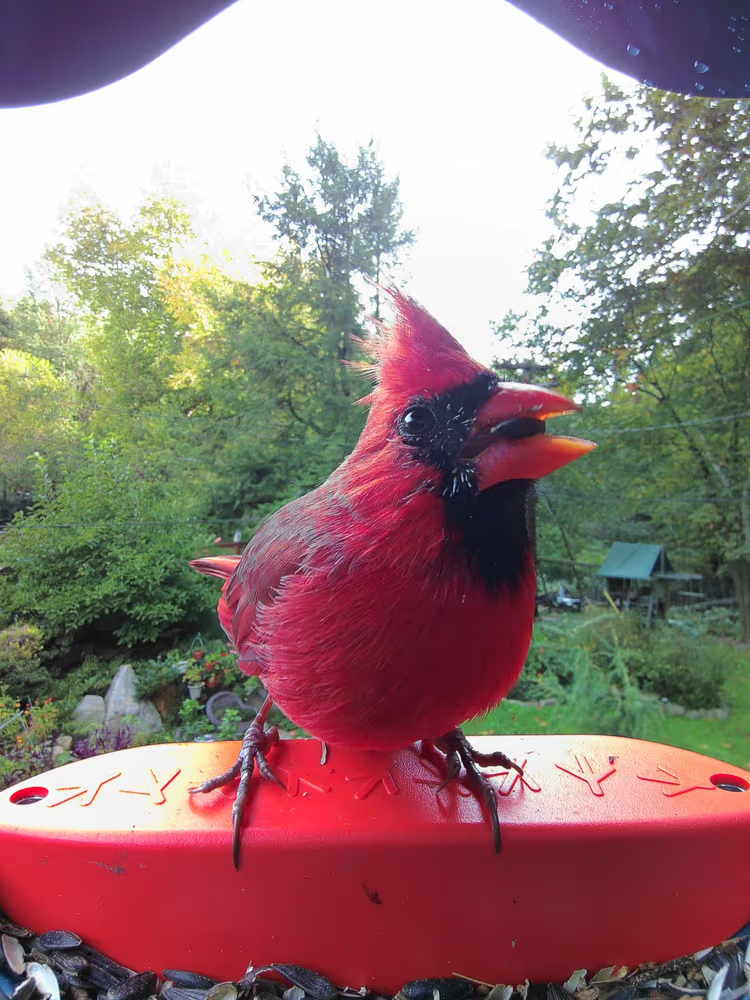
1. Northern Cardinal
The red bird most people mean. Males are red from crest to tail with a black face; females are warm tan with red on the crest, wings and tail. Cardinals don't migrate, so you'll see them all winter across the East, Midwest, South and parts of the Southwest. Their color comes from pigments in their food, as the Missouri Department of Conservation explains. Curious what a cardinal visit means to people? Read our post on cardinal meaning.
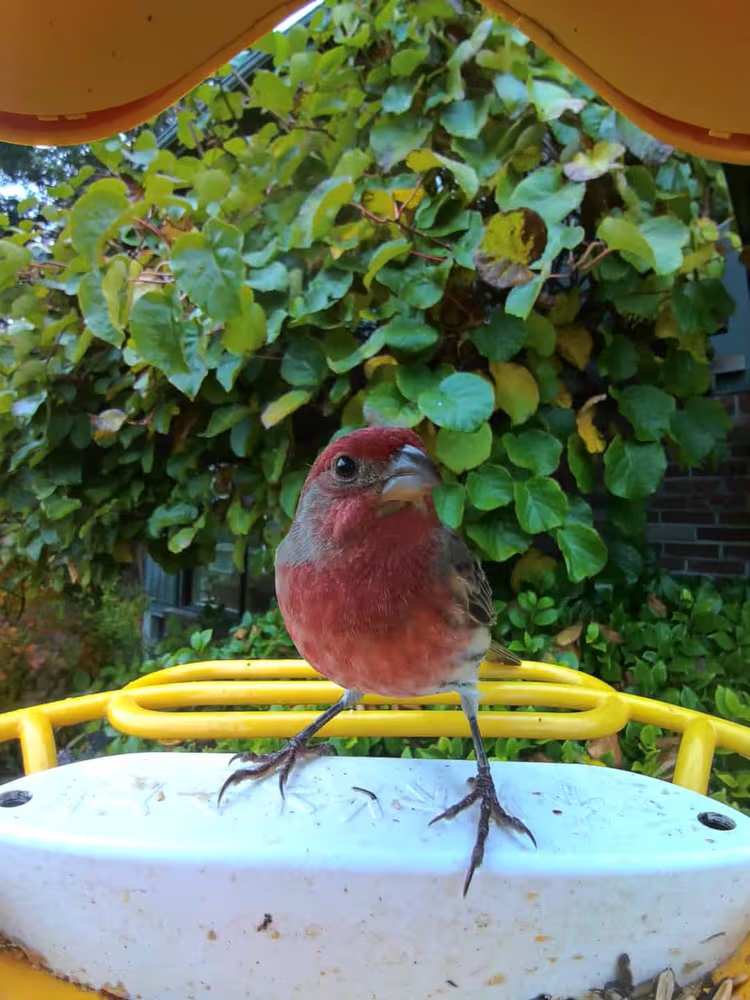
2. House Finch
The small red bird at most feeders. Males have red on the head, chest and rump, with brown streaks running down the sides. The red can also look orange or even yellow, depending on what the bird has been eating. House Finches were originally western birds; the Missouri Department of Conservation notes they were introduced on Long Island in 1940 and spread east from there.
3. Purple Finch
Not purple at all. Roger Tory Peterson described the male as a sparrow "dipped in raspberry juice": the color is washed over the head, back and wings, and the belly is clean white with no sharp streaks. Females are brown with a bold white eyebrow. They winter across much of the eastern US.
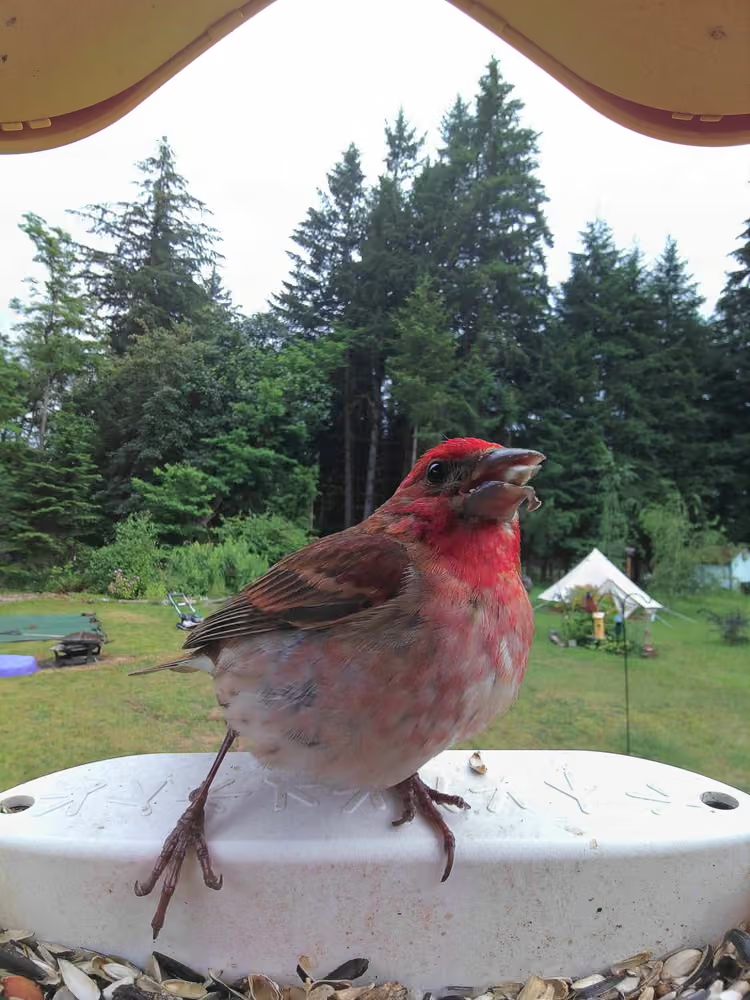
4. Cassin's Finch
The red finch of the mountain West. Males have a bright red cap that often looks peaked, set against a brownish, streaked back. Look for them at feeders near conifer forests in winter.
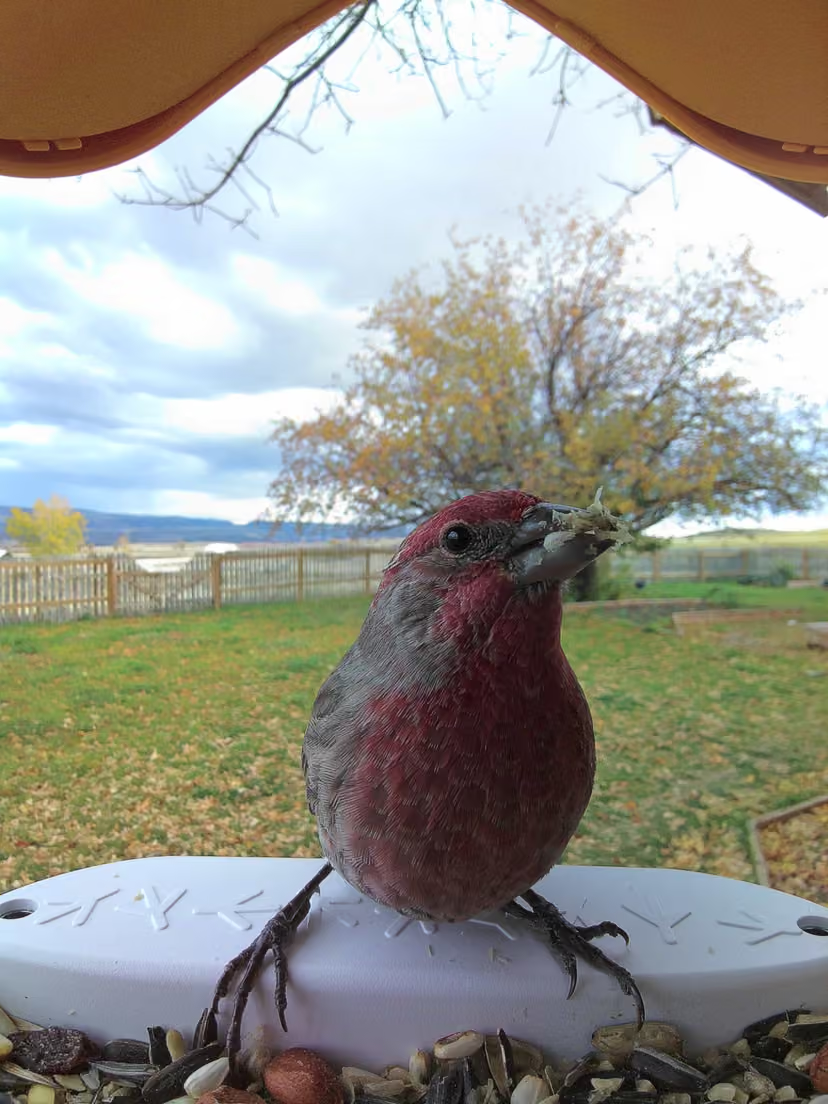
5. Pine Grosbeak
A big, plump finch, nearly robin-sized, with a rosy head and body, gray sides and white wing bars. Pine Grosbeaks live in northern forests and come south in winters when their food runs short. They're famously calm around people.

6. Red Crossbill
Look closely at the bill: the tips cross, a tool for prying seeds out of conifer cones. Males are brick red. Red Crossbills wander wherever cones are plentiful, so they can show up one winter and disappear the next.
7. White-winged Crossbill
Pinker than the Red Crossbill, with two bold white wing bars. It specializes in spruce and tamarack cones and moves south in years when northern crops fail.
8. Redpoll
A small, streaky finch with a red cap and a black chin; males also have a pink wash on the chest. In 2024, ornithologists combined Common and Hoary Redpolls into one species, now called simply Redpoll. In irruption years they crowd nyjer feeders.
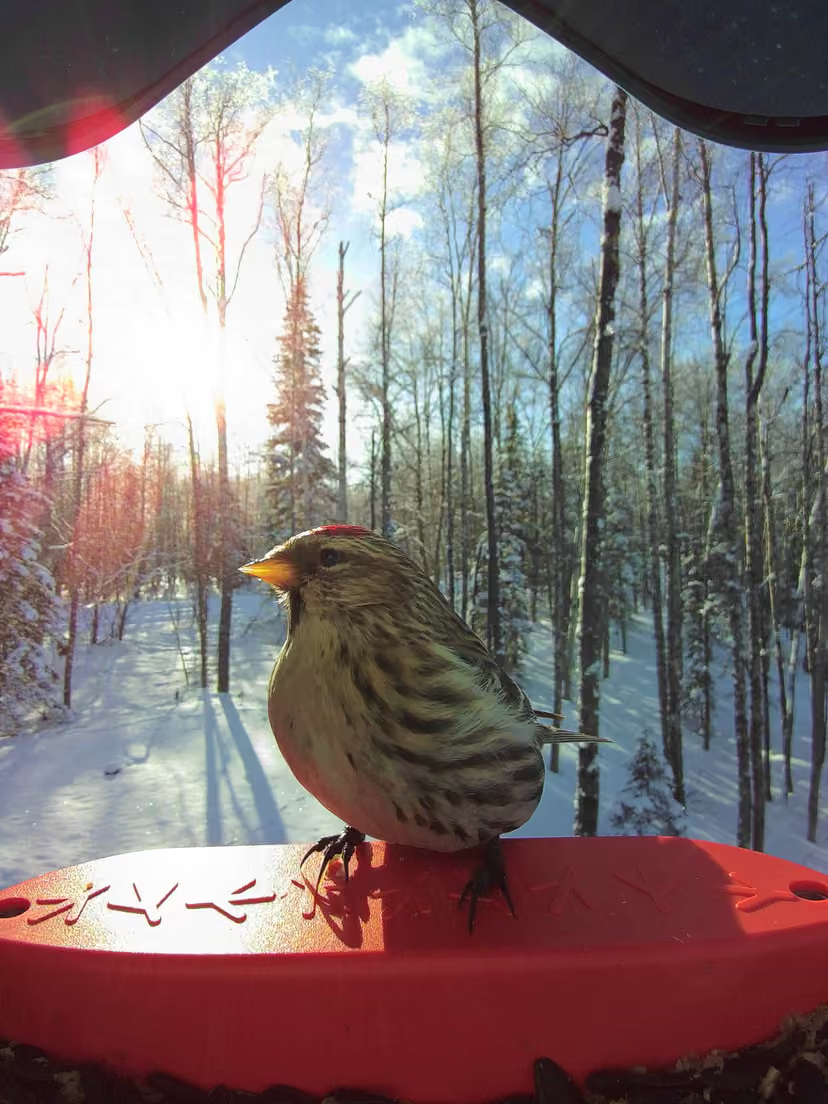
9. Pyrrhuloxia
The "desert cardinal" of Arizona, New Mexico and Texas. Shaped like a cardinal but gray, with red on the face, crest and chest and a stubby yellow bill.
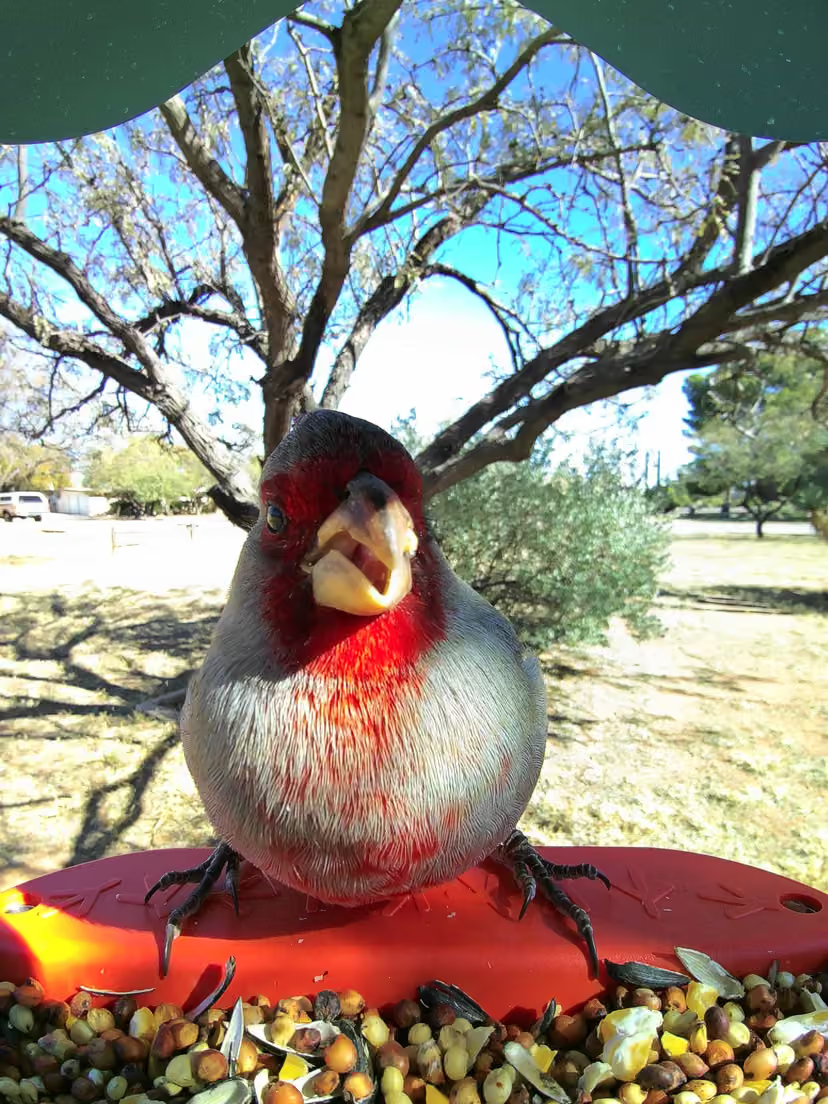
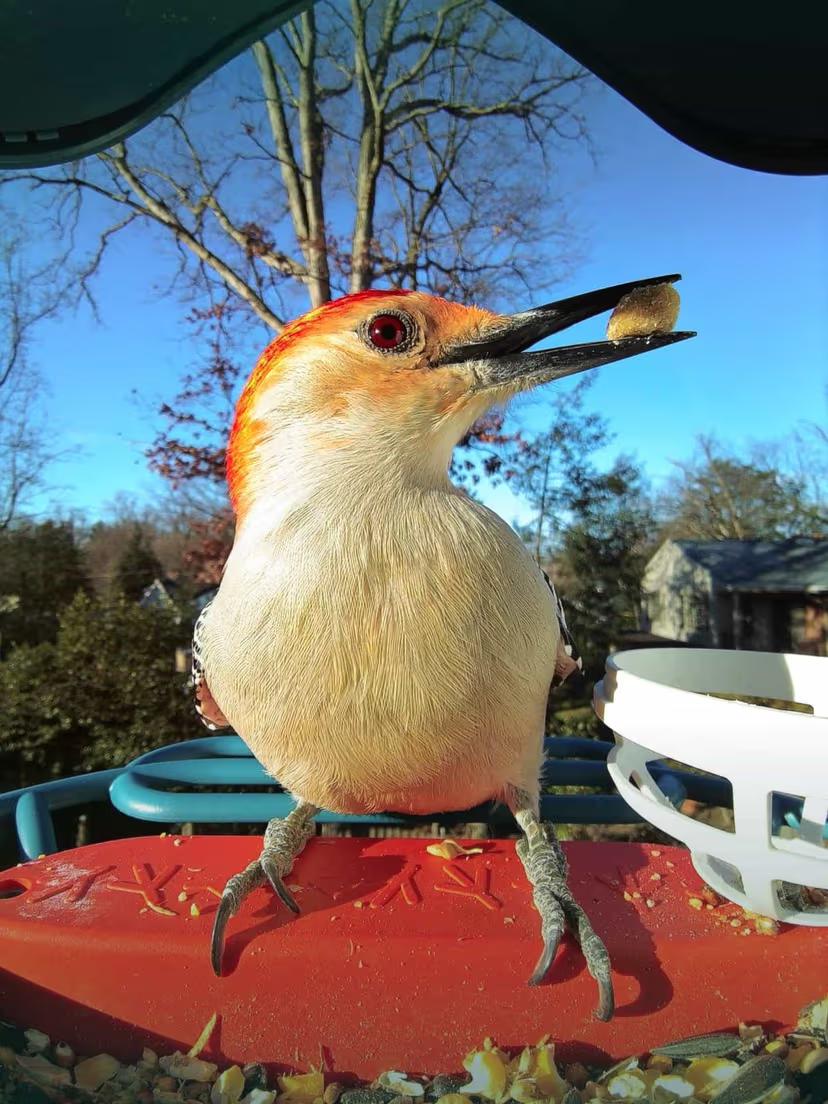
10. Red-bellied Woodpecker
The name confuses everyone: the red belly is just a faint blush. What you'll notice is the red cap and nape and the black-and-white zebra-striped back. It's a regular at suet and peanuts in the East.
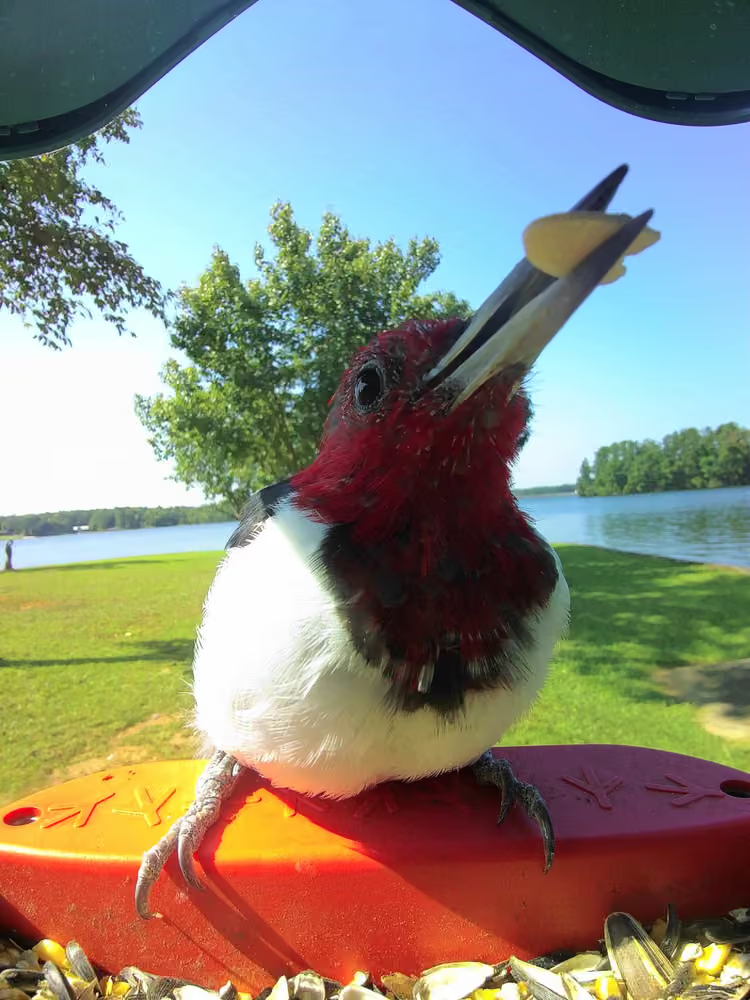
11. Red-headed Woodpecker
The whole head is deep red, set against a crisp black-and-white body with big white wing patches. Less common than the Red-bellied, it stores acorns and visits suet in winter.
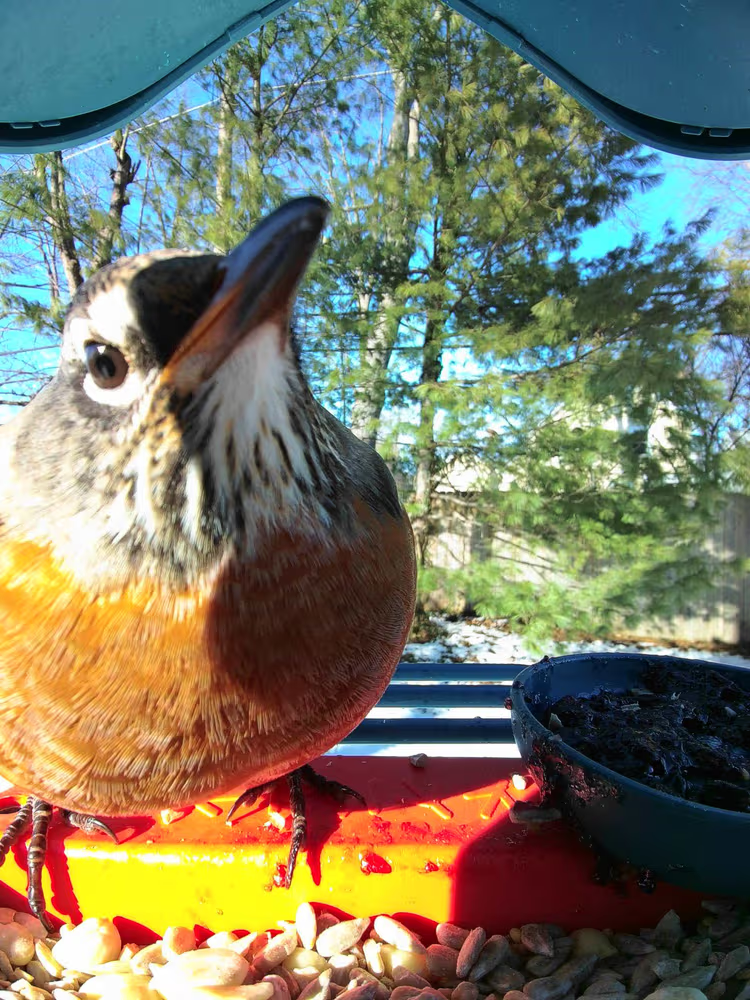
12. American Robin
Not every robin flies south. Many spend the winter in the North, switching from worms to fruit and gathering in flocks. They rarely eat seed, but chopped apples, soaked raisins or dried mealworms can bring them in. See our winter feeding guide.
Why some red birds only show up some winters
Pine Grosbeaks, crossbills and redpolls are "irruptive": they stay north when seed crops are good and move south in large numbers when they fail. This year's winter finch forecast points to poor seed crops in the central boreal forest, which could push more finches into eastern Canada, the Great Lakes and the northeastern US.
Not sure which red bird it was?
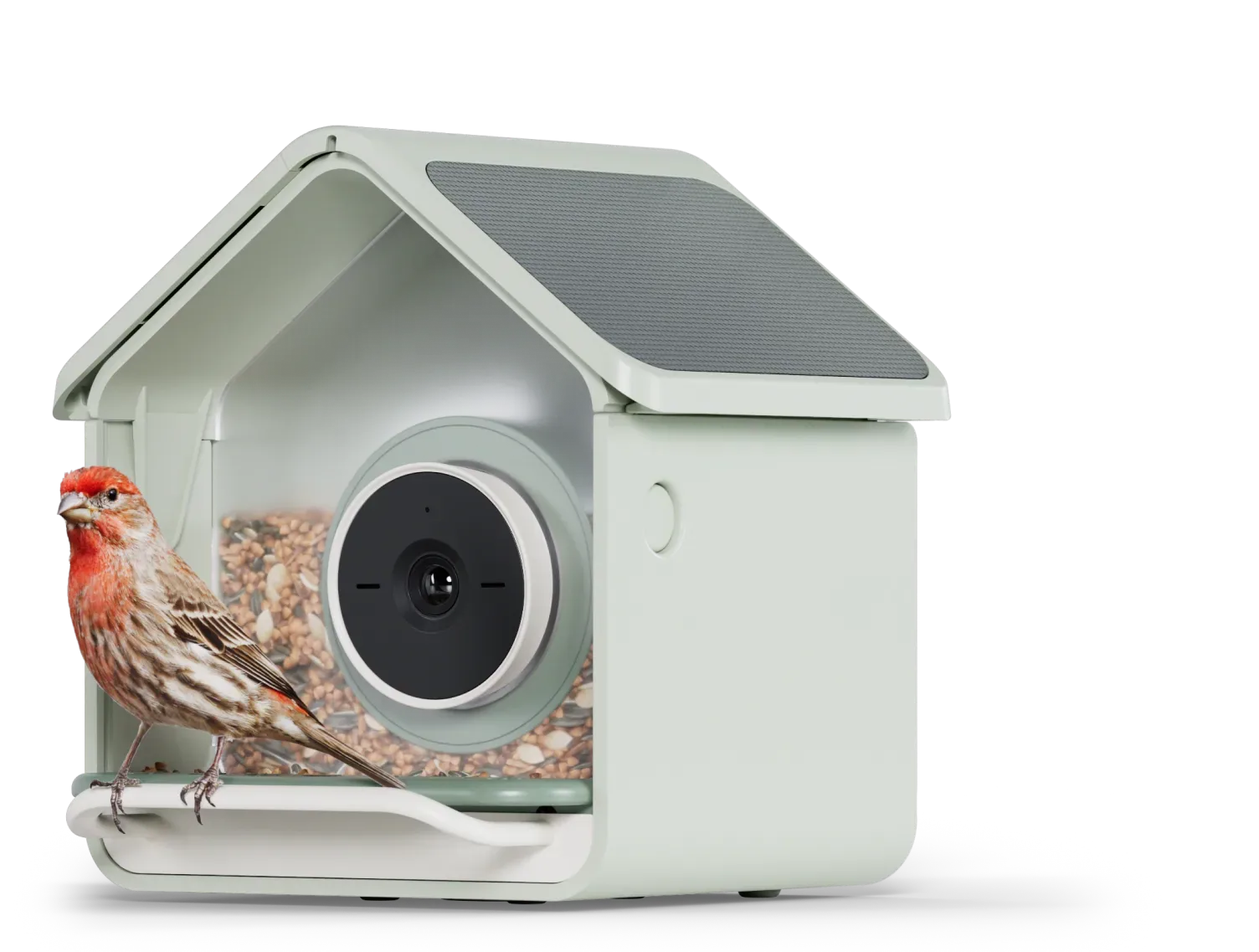
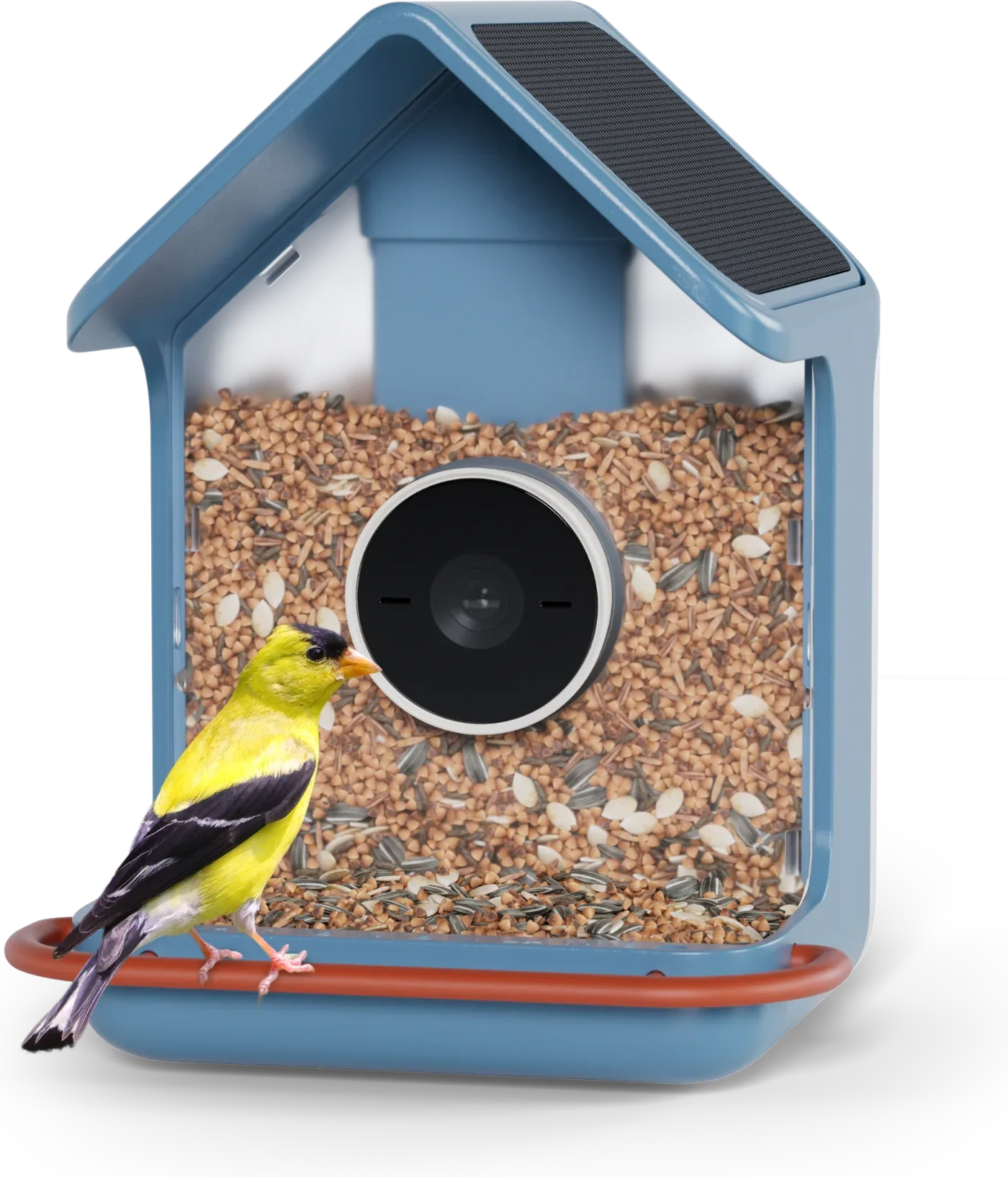
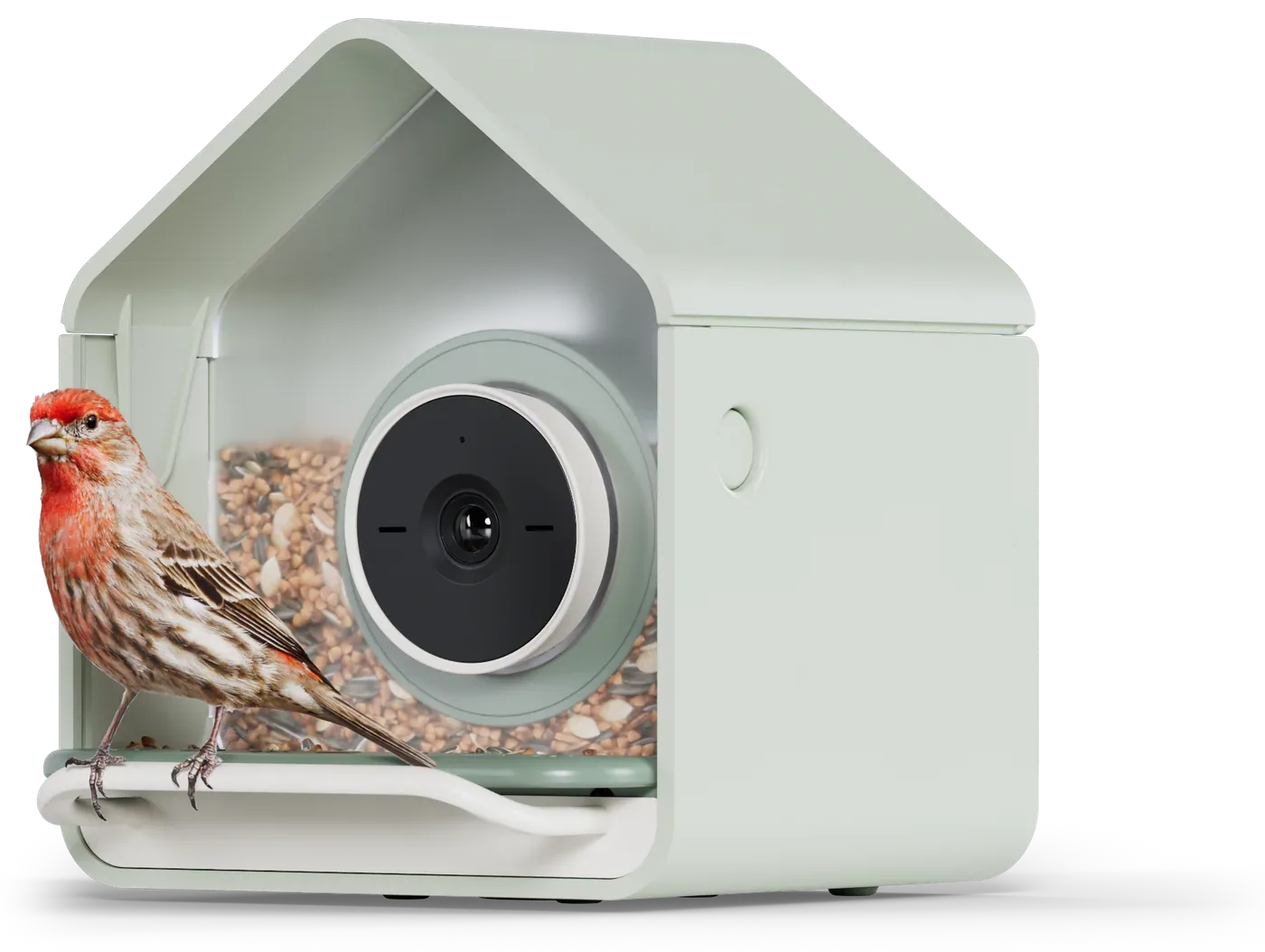
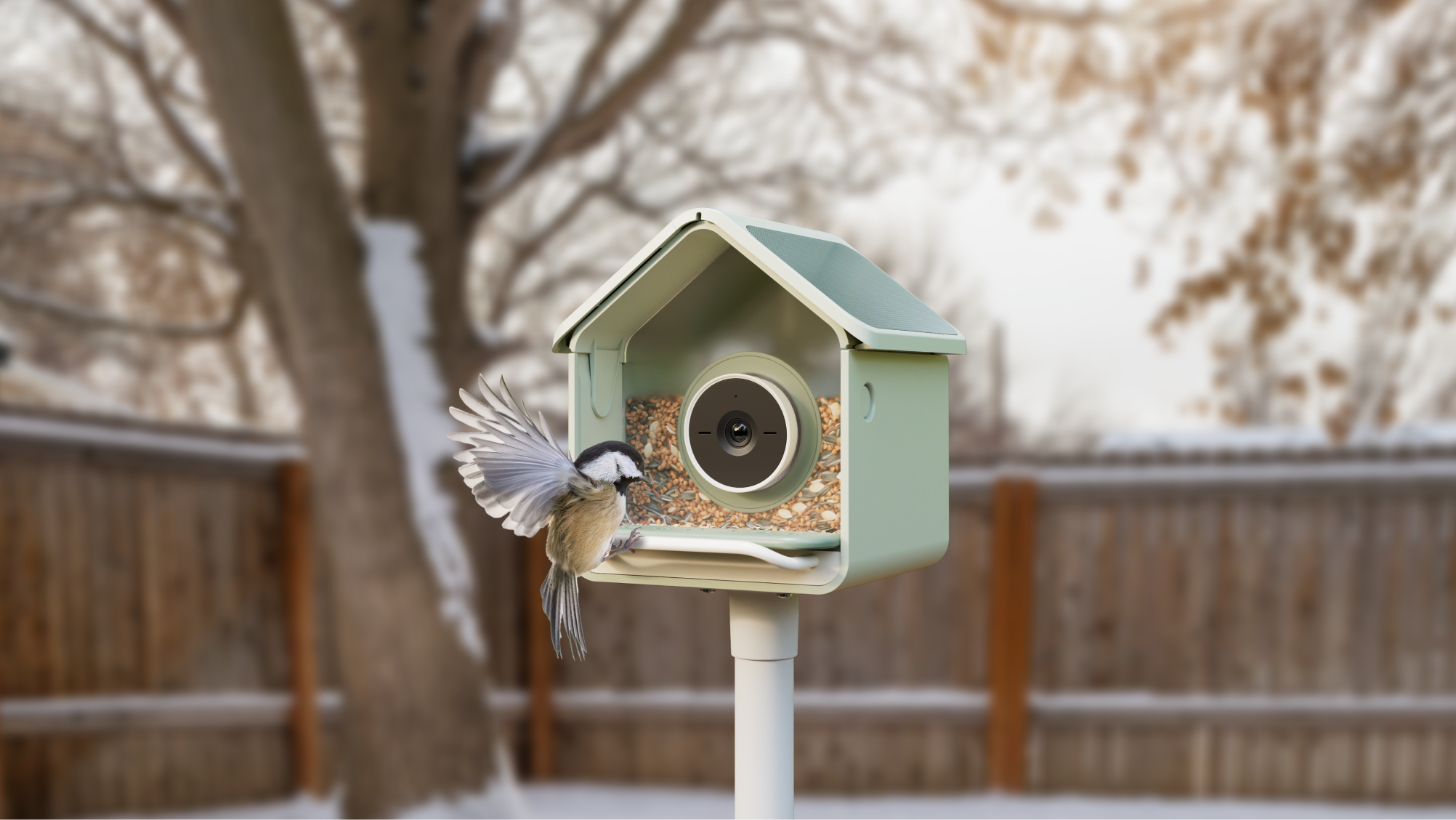
House and Purple Finches fool experienced birders, and a female crossbill can pass for something else entirely. A Birdbuddy smart feeder photographs every bird that lands and suggests the species, so you can zoom in on the streaks, the wing bars or the bill and check. Got a red visitor you can't place? Share the photo with the Birdbuddy community.
The takeaway
Most red birds at North American feeders in winter are Northern Cardinals or House Finches. Check size, crest and streaking first: a big crested bird is a cardinal, a small streaky one with red on the head and chest is a House Finch, and a raspberry-washed finch with a clean belly is a Purple Finch. In the North, watch for redpolls, crossbills and Pine Grosbeaks, especially if this year's finch forecast holds.
Frequently asked questions
What is the small red bird at my feeder?
Almost always a male House Finch. Check for brown streaks along the sides: House Finches have them, Purple Finches don't.
What red bird has a black face?
The male Northern Cardinal. Its black face mask and red crest make it easy to identify.
What bird is red with black wings?
In summer, that's usually a Scarlet Tanager, but tanagers leave for the tropics before winter. At a winter feeder, a red bird with dark wings is more likely a crossbill or a Pine Grosbeak.
Why is my House Finch orange or yellow?
Its color depends on the pigments in its food. A House Finch that ate fewer red pigments while growing new feathers can turn out orange or yellow.