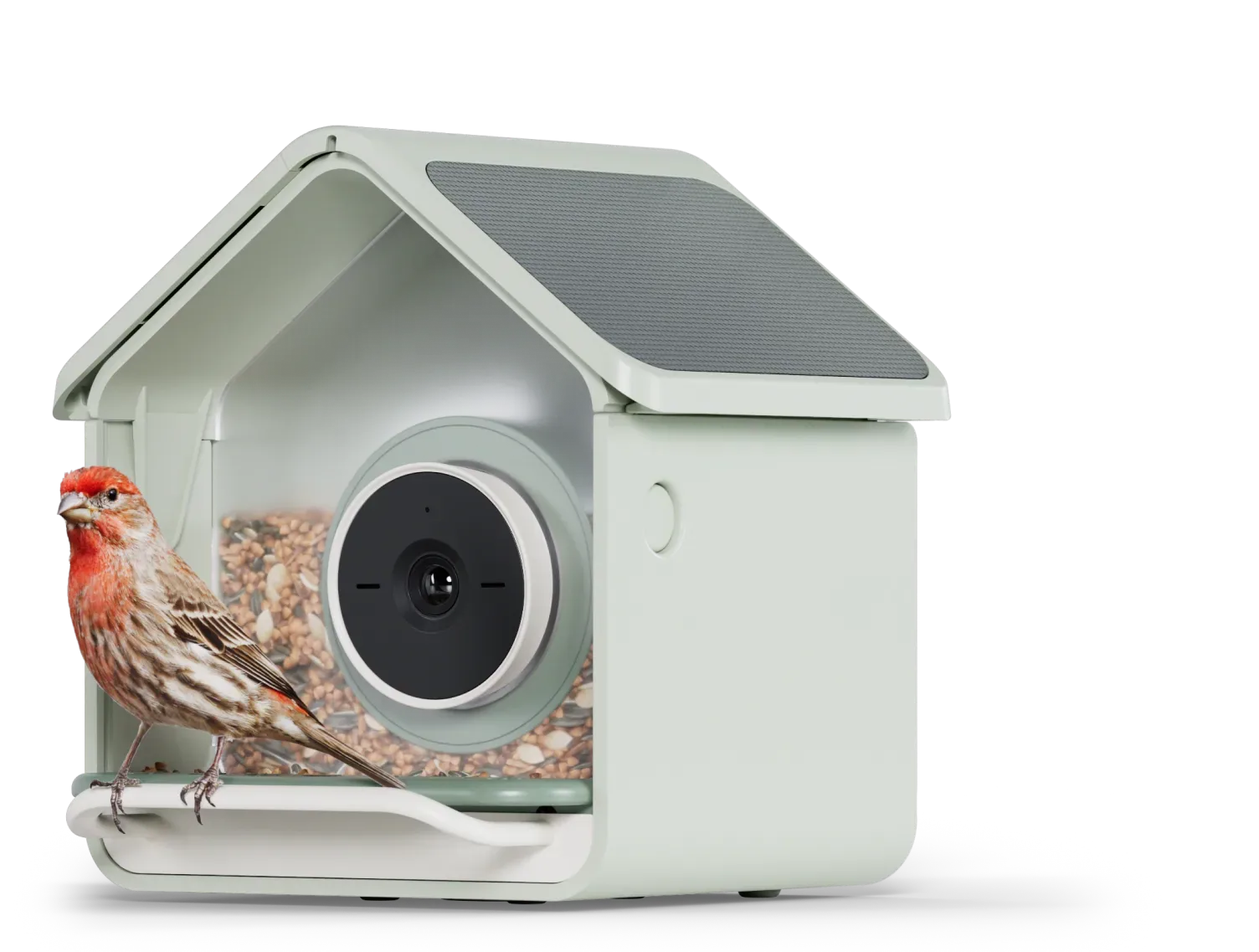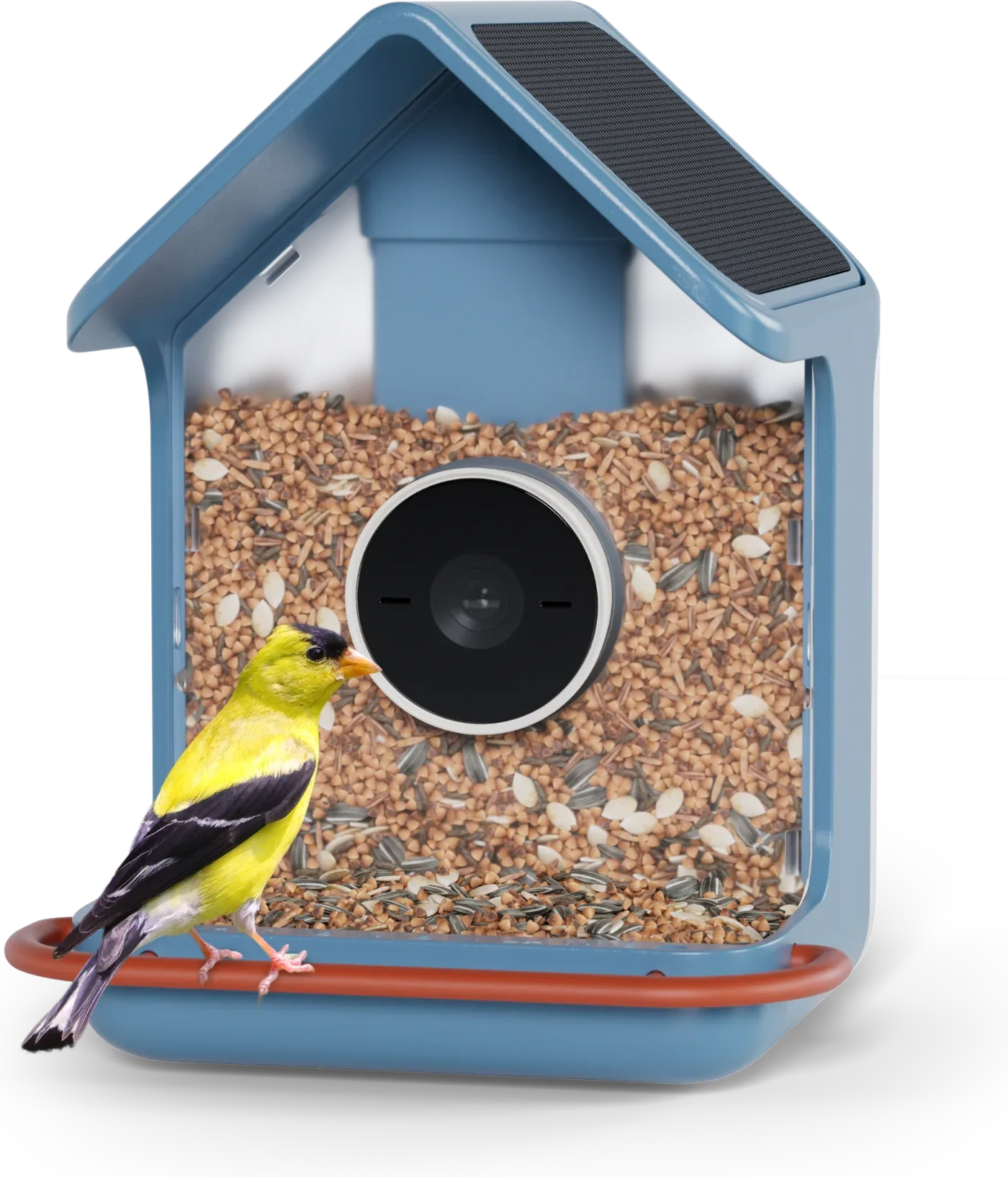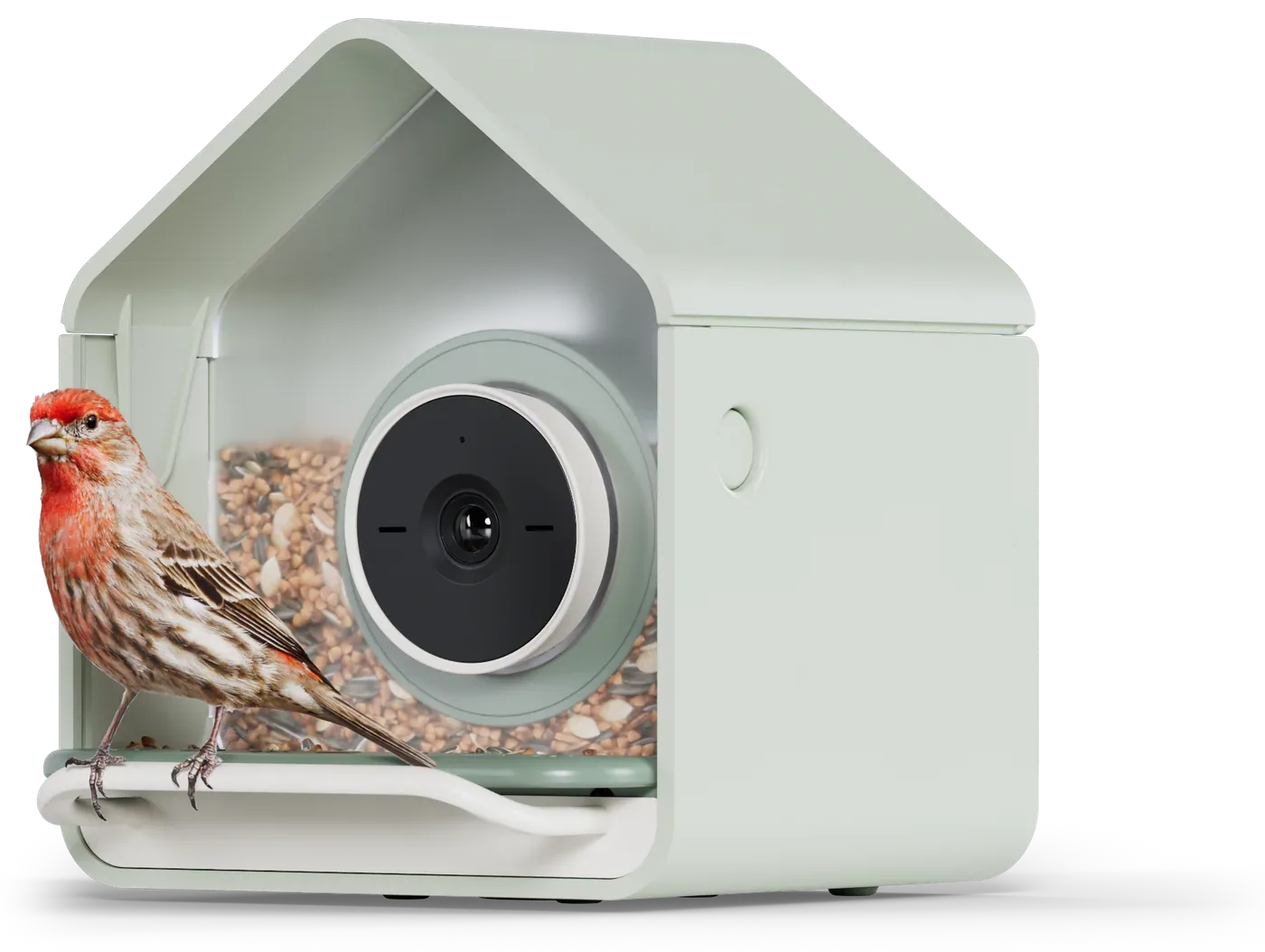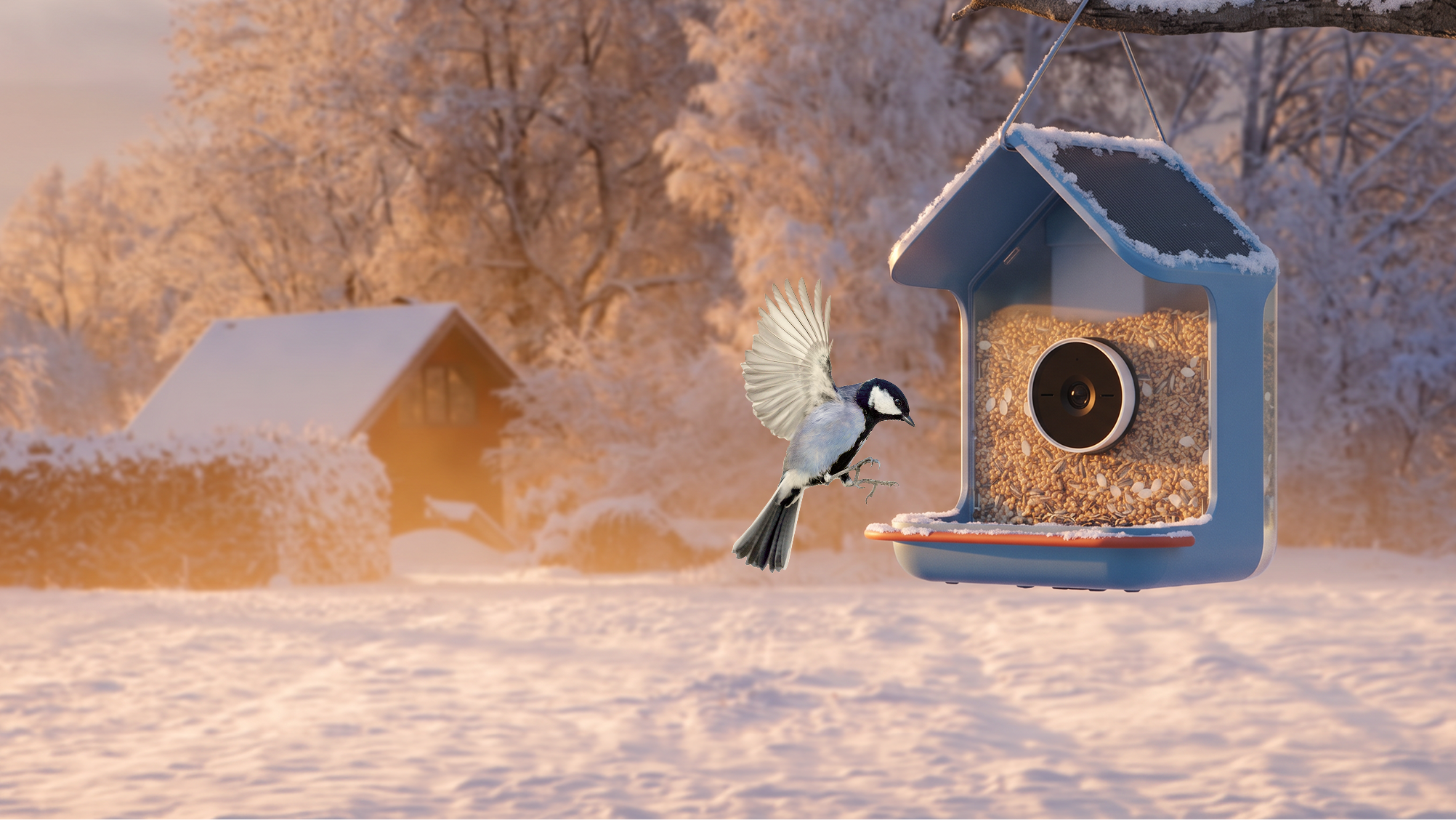
What is the best smart bird feeder for beginners? One that is easy to set up, identifies birds without a subscription, keeps itself charged and fits the space you have. For most first-time users that means a compact solar model like the Birdbuddy Nook (from $99). For a bigger yard with lots of visitors, a larger-capacity feeder like the Birdbuddy Home ($219) needs refilling less often.
Key takeaways
- A smart feeder photographs every bird that lands and names the species in an app.
- For beginners, the features that matter most are free identification, solar power, Wi-Fi range and seed capacity.
- The Birdbuddy Nook suits patios, balconies and small yards; the Birdbuddy Home suits bigger, busier backyards.
- Place it within Wi-Fi range, fill it with black-oil sunflower and give birds a week or two to find it.
How a smart bird feeder works
A smart feeder is a seed feeder with a camera built into it. When a bird lands on the perch, the camera wakes up and takes photos or a short video. The feeder sends them over your home Wi-Fi to an app, where software trained on bird photos suggests the species. Your phone gets a notification, and every visit is saved in a gallery you can scroll through later.
The result is a record of who visits, when, and how often, without you having to watch the window.
Six things to look for
1. Free species identification
Identification is the main reason most people buy a smart feeder, so check whether it costs extra. Birdbuddy's AI species recognition is free, with no subscription needed to see which bird you've photographed.
2. Power that keeps up in winter
A battery feeder has to come down for charging, which is a chore in January. A solar roof keeps it topped up, but short winter days mean less sun, so look for a solar panel sized for the season. Nook Solar and Birdbuddy Home both charge from the sun; the standard Nook runs on a battery that lasts up to a month and recharges over USB-C.
3. Wi-Fi that reaches the feeder
The camera is only as good as its connection. Before you buy, stand where the feeder will hang and check your phone's Wi-Fi signal. If it's weak, choose a feeder with stronger Wi-Fi: Birdbuddy Home has dual-band Wi-Fi for a steadier connection farther from the house.
4. Seed capacity
A small feeder is easier to place, but it needs refilling more often in winter, when birds eat the most. The Nook holds about 4 cups of seed; the Home holds 1.4 liters, about 6 cups.
5. A camera angle that suits sharing
Some feeders frame every shot the same way. The Nook records in portrait or landscape, so clips are ready for a phone screen or for sending to family.
6. Where you can put it
Think about where it will go before you choose. A compact feeder fits a balcony rail or a small patio; a larger one needs a pole, a tree branch or a fence post, ideally with a squirrel baffle below it. Our guide to squirrel-proofing your feeder covers placement.
Birdbuddy Nook or Birdbuddy Home?
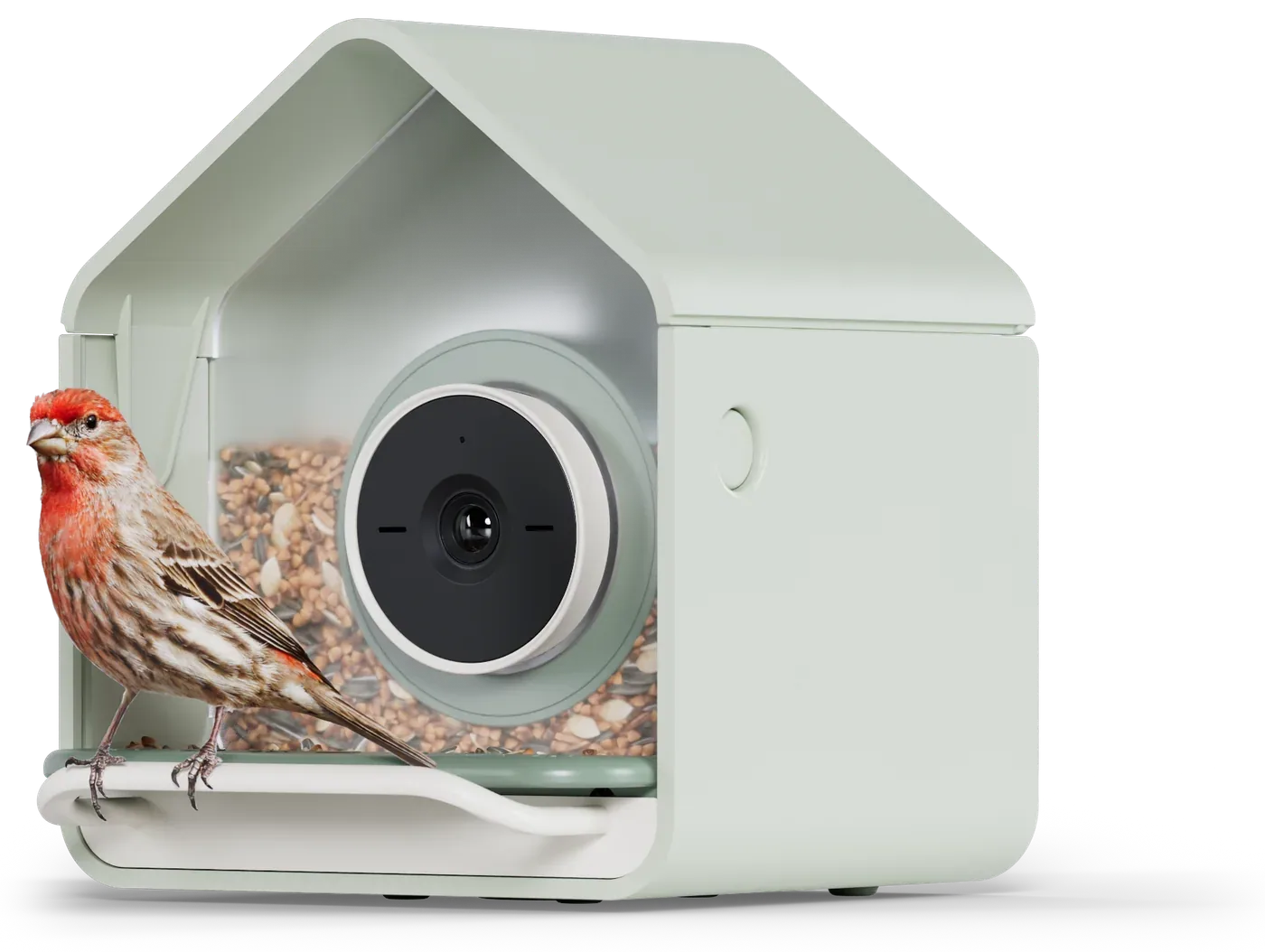
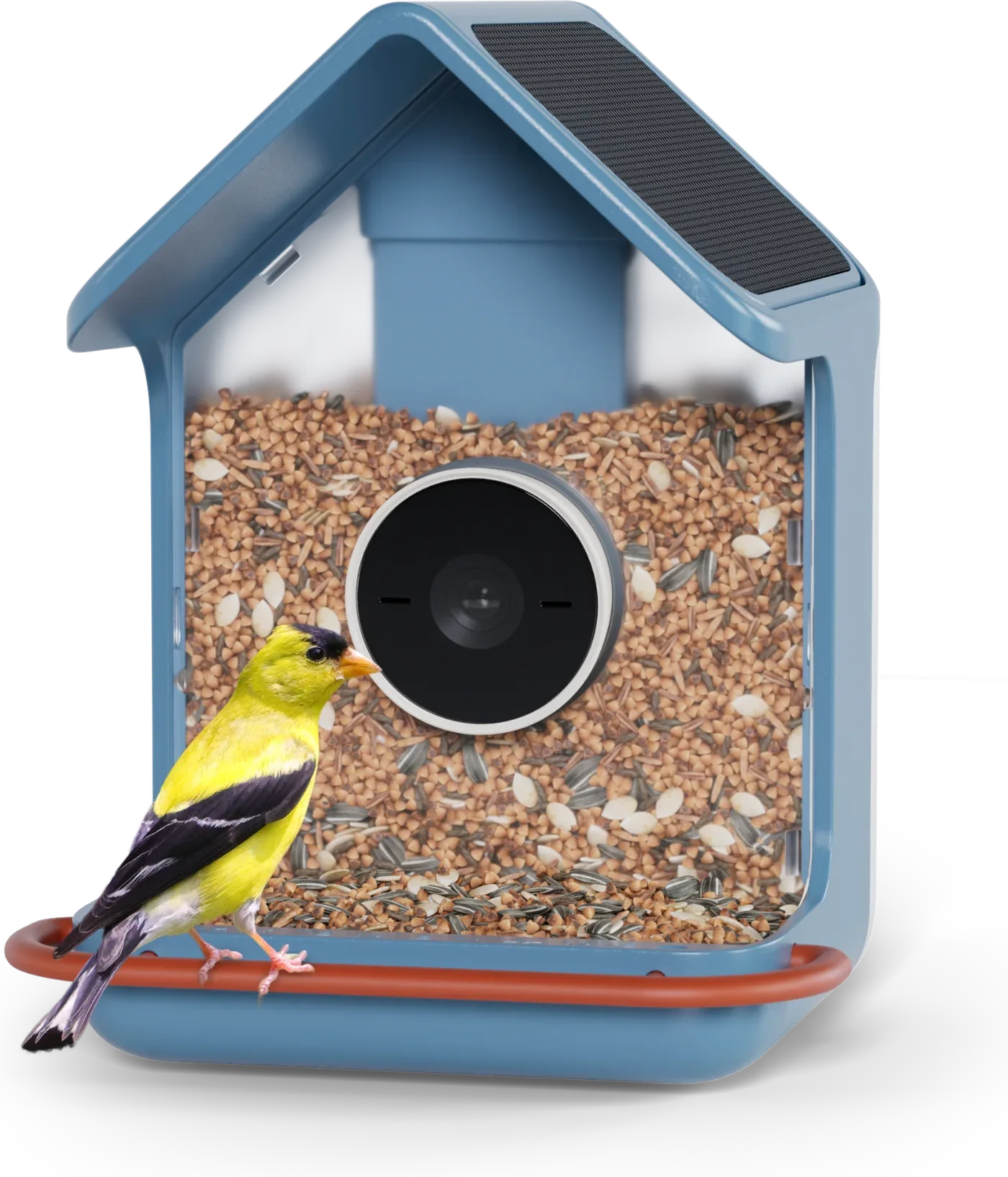
Both identify birds for free and send every visit to your phone. The difference is size and setting. Prices are from Birdbuddy's October 2026 launch announcement; check the shop for current offers.
If you're buying for a beginner, or for a gift, the Nook is the easier start. The Nook Extended Edition adds a larger perch and a family Premium membership, which suits grandparents who want to share sightings with the family. If the birds already empty a feeder every few days, the Home's capacity and stronger Wi-Fi are worth the step up.
Setting up your first smart feeder
- Check the signal. Stand where the feeder will go and make sure your phone has a solid Wi-Fi connection.
- Pick a spot birds feel safe. Near shrubs or trees gives birds cover to dart to, but not so close that squirrels can jump straight on.
- Mind the window. A feeder very close to glass, or well away from it, is safer for birds than one a few yards out, where they can build up speed before hitting the window.
- Fill it with black-oil sunflower. It brings in the widest range of birds. Our guide to what to feed birds in winter covers the rest.
- Be patient. Birds can take a few days to a couple of weeks to trust a new feeder. Once the first chickadee finds it, others usually follow.
The takeaway
A smart bird feeder photographs every bird that lands and tells you what it is, which makes it the fastest way for a beginner to learn backyard birds. Look for free identification, solar power for winter, Wi-Fi that reaches the spot and enough seed capacity for your yard. For a balcony, patio or first feeder, start with the Birdbuddy Nook; for a busy backyard, choose the Birdbuddy Home.
Frequently asked questions
Do smart bird feeders need a subscription?
Some charge for identification. Birdbuddy's AI species recognition is free; a Premium membership is optional, and the Nook Extended Edition includes a family membership.
Do smart bird feeders work in winter?
Yes, and winter is when they're busiest. Choose a solar model so the battery stays charged through short days, and brush snow off the roof and camera after a storm.
How long does it take birds to find a new feeder?
Anywhere from a day to a few weeks. Birds that already visit other feeders nearby usually find it fastest. Filling it with black-oil sunflower and placing it near cover helps.
Is a smart bird feeder a good gift?
Yes, especially for beginners and grandparents, because it works from day one and doesn't require any birding knowledge. See our gift guide for bird lovers for more ideas at every budget.